Home remodeling trends Coconut Grove homeowners are chasing in 2026 all point toward one idea: a house that looks like it belongs under the banyan canopy, not one dropped in from a glossy national magazine. Bayfront humidity, century-old bungalows, and glass-and-steel infill sit on the same block here, and that mix shapes every material and layout decision. This guide breaks down what's actually happening in Grove kitchens, bathrooms, and permit offices right now, plus the zoning quirks that decide what you're allowed to build in the first place.
Kitchen Remodeling Trends Coconut Grove Homeowners Are Choosing in 2026
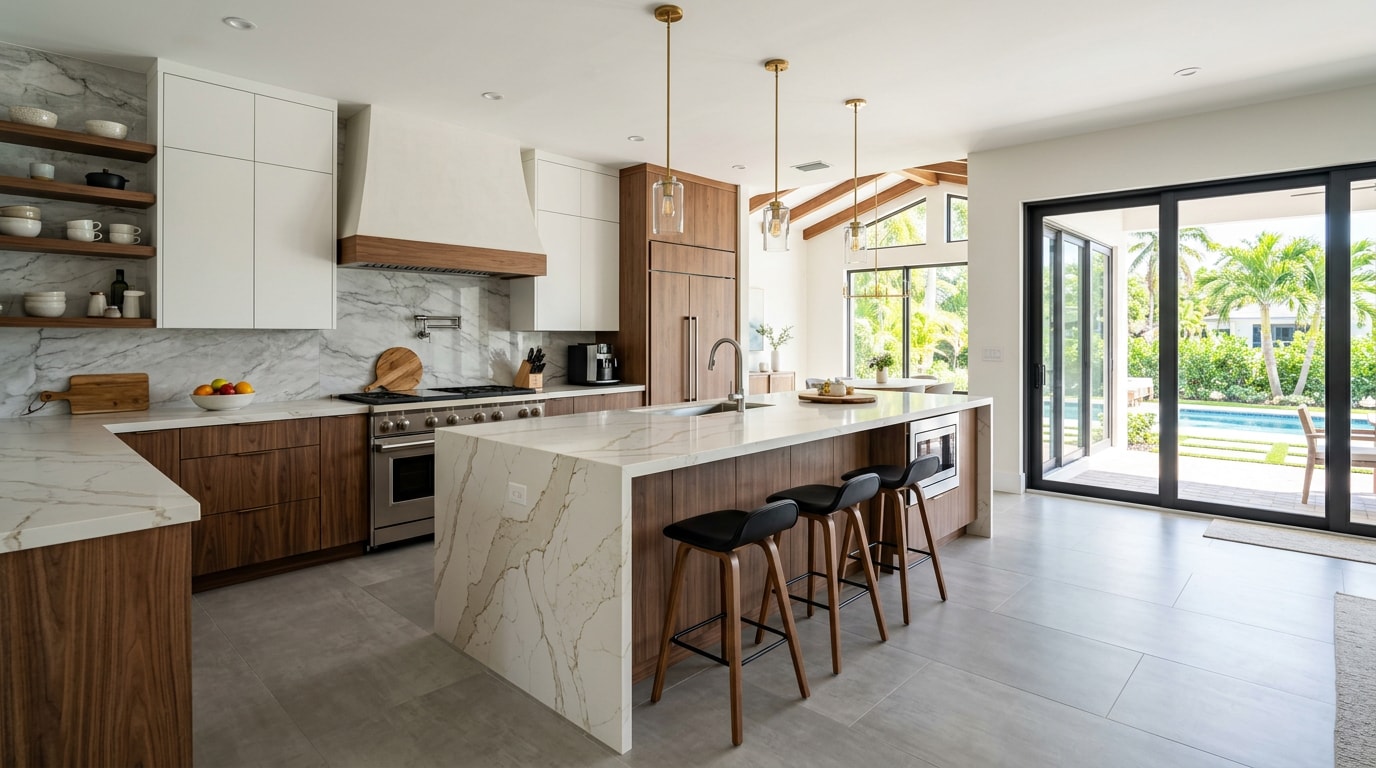
Kitchens remain the single most remodeled room in the neighborhood, and the look driving most 2026 projects is best described as tropical modern: warm materials, open sightlines, and a direct visual line to whatever greenery sits outside the window.
Open Layouts That Flow Into the Landscape
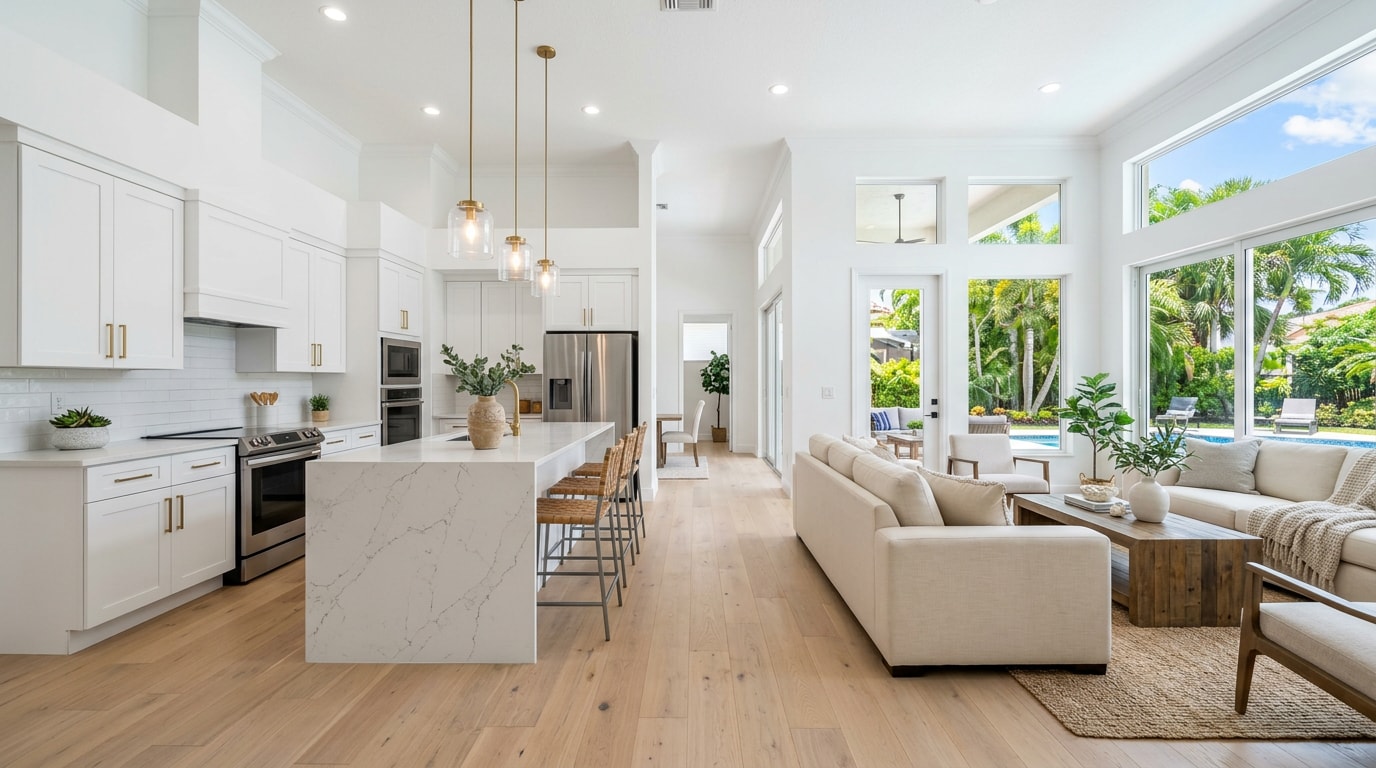
Homeowners are pulling down dividing walls so light and foot traffic move freely through the main living level. A large island typically anchors the room, doing triple duty as prep space, casual dining counter, and the one spot everyone ends up standing around during a dinner party.
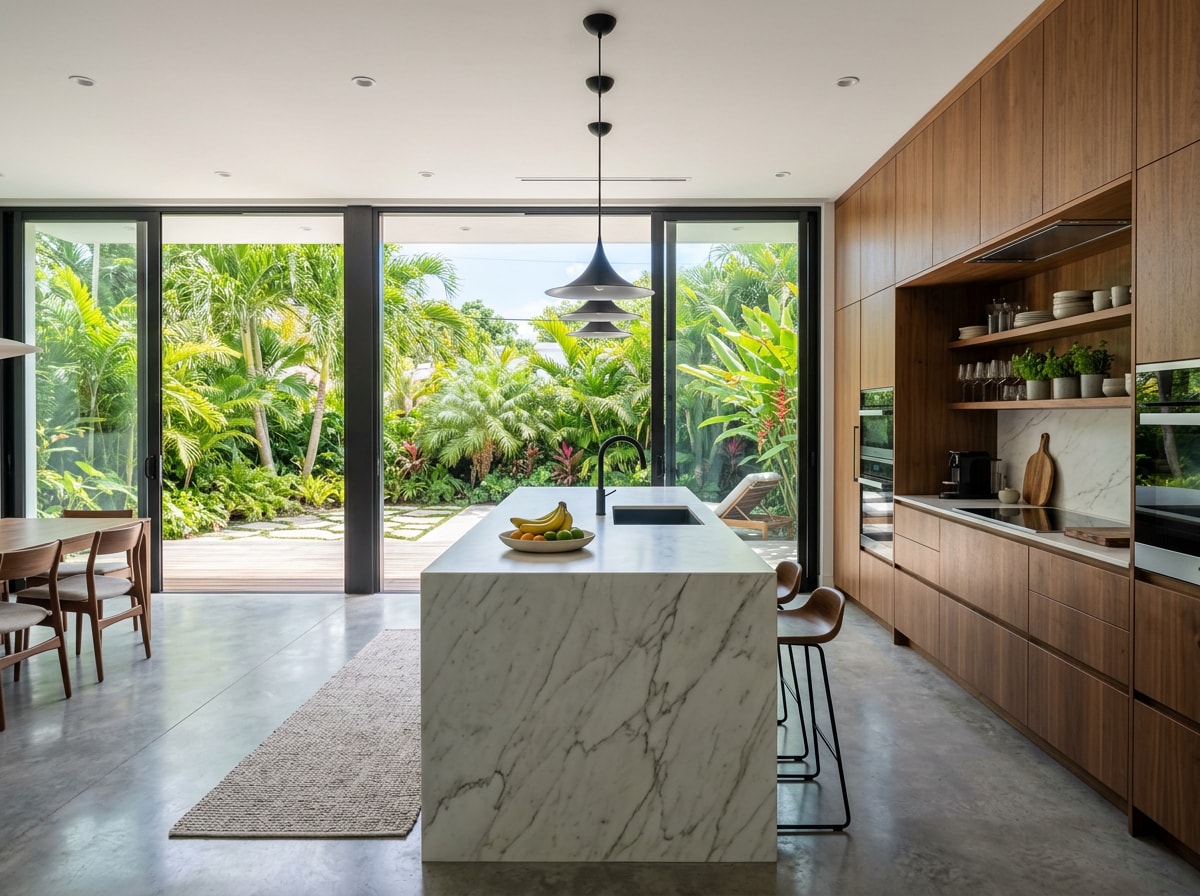
That open-plan instinct doesn't stop at the kitchen door. Sightlines increasingly run from the kitchen island straight through to a patio, pool deck, or garden, which is a layout choice that reads as distinctly Coconut Grove rather than generic coastal.
Bespoke Cabinetry and Wood Are Back on Top
Custom cabinetry is the defining feature of a Coconut Grove kitchen right now, usually European-inspired matte boxes paired with warm, natural wood. The combination reads organic without looking unfinished.
This isn't just a Grove preference. The Houzz study found that wood is now the most popular cabinet color in renovated kitchens, chosen by 29% of homeowners, up 6 percentage points from last year and edging past white at 28%. Backsplashes are following the same warmer, more textural direction: tile remains the dominant backsplash material in renovated kitchens (72%), while slab backsplashes now account for 28%, up from 24% the previous year.
Budget expectations are shifting too. According to the same national study, the median spend for major and minor kitchen remodels varies widely. Major projects come in at $55,000, while minor projects land at $20,000.
The median major remodel of a larger kitchen is $75,000, compared with $46,000 for a smaller space. Coconut Grove projects tend to land on the higher end of that range once custom countertop fabrication and imported cabinetry lead times get added in. For a line-by-line look at what drives South Florida kitchen budgets, our kitchen construction cost guide breaks down permit fees, labor, and material pricing in more detail.
On a recent project off Devon Road, the cabinet order alone took longer than the entire installation once the matte-finish European boxes were factored in, a timeline gap that rarely shows up in national renovation calculators and catches homeowners off guard more often than the construction itself.
Bathroom Remodeling Trends: Coastal Biophilic Design and Floating Vanities
Bathrooms are following the kitchen's lead toward natural materials, but the look here leans spa rather than showroom.
Biophilic Design: Bringing the Outdoors In
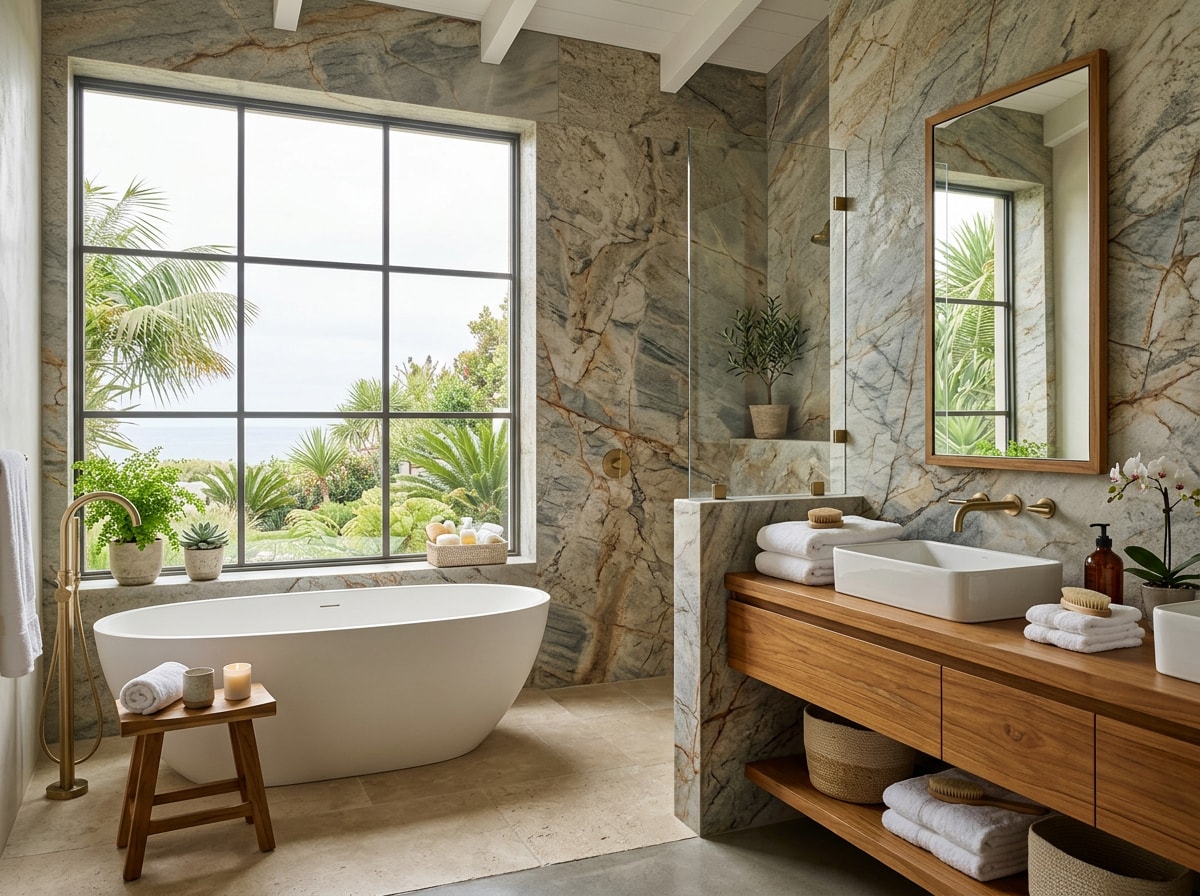
Biophilic bathroom design has moved well past seashell accents toward genuine organic texture. The goal is a room that feels pulled from the surrounding landscape, not decorated to suggest it.
That means:
- Natural stone surfaces with visible veining, quartzite, travertine, and live-edge marble show up often
- Teak and bamboo accents paired with the stone for warmth
- Marine-grade sealers on every porous surface to fight humidity and salt exposure
Floating Vanities and Minimalist Storage
Wall-mounted, floating vanities with concealed storage are the dominant silhouette in 2026 Grove bathrooms. Beyond the look, floating vanities make floor cleaning noticeably easier, which matters in a climate prone to mildew buildup along baseboards.
Floating double vanities finished in matte white, greige, and deep navy are showing up project after project across Coconut Grove and neighboring Coral Gables. Browse our bathroom remodeling services to see current layout and material options, or see how a similar coastal bathroom came together in our Palmetto Bay remodeling guide.
Storm Ready Materials: Building for Biscayne Bay's Climate
Biscayne Bay is beautiful and unforgiving. Salt air, near-constant humidity, and hurricane exposure mean every material choice has to do double duty: look good and survive the environment.
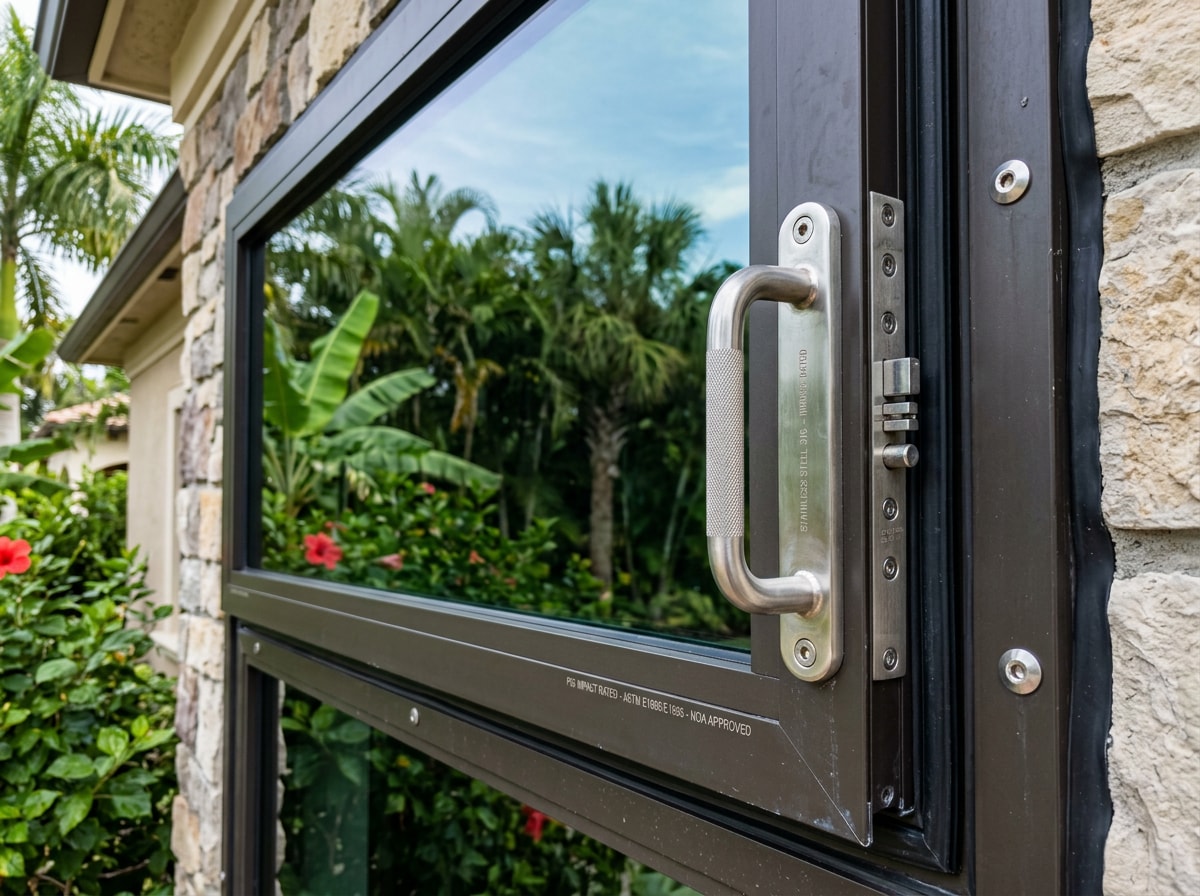
Coconut Grove sits inside Florida's High-Velocity Hurricane Zone, so opening protection isn't optional. Mandatory impact-rated or shutter-protected openings are required on every building, regardless of distance from the coast, with products approved for HVHZ use. Before buying windows, confirm the exact product approval. "Miami-Dade approved" generally refers to a building product that has received a Notice of Acceptance from the Miami-Dade County Product Control Section, but some products approved for use in the High-Velocity Hurricane Zone are classified as non-impact and may require supplemental opening protection. Run the exact model and configuration through the Miami-Dade Product Control Search before finalizing an order.
| Material | Standard Option | Storm-Ready Option | Why It Matters in Coconut Grove |
|---|---|---|---|
| Windows | Non-impact vinyl | Impact-rated aluminum frame | Required under HVHZ rules; often lowers insurance premiums |
| Hardware | Standard stainless | Marine-grade stainless or brass | Resists salt-air corrosion near the bay |
| Exterior wood | Untreated softwood | Weather-resistant hardwood species | Holds up against humidity and UV without warping |
| Glazing | Single-pane | Energy-efficient impact glazing | Cuts cooling costs in a year-round warm climate |
Standard vinyl windows and basic stainless hardware cost less upfront but corrode faster in salt air. Marine-grade hardware and impact-rated aluminum framing run higher per opening but hold up considerably longer. For most Grove homeowners, that premium pays for itself within a decade of avoided replacements.
Navigating Coconut Grove's Historic Permits and Tree Rules
Remodeling here isn't the same as remodeling in a standard Miami-Dade subdivision, and the permit process trips up more out-of-town contractors than any design decision.
Know Which Agency Actually Issues Your Permit
Coconut Grove sits inside the incorporated City of Miami, not unincorporated Miami-Dade County, and that distinction matters. The county's Department of Regulatory and Economic Resources (RER) issues permits for unincorporated areas. All 34 incorporated municipalities handle their own permitting. That means most Coconut Grove projects route through the City of Miami's own permitting system, not the county portal that many generic remodeling guides default to. Confirm the correct jurisdiction on the City of Miami Permits & Construction page before submitting plans.
NCD-3 Zoning: What You Can and Can't Change
Much of Coconut Grove falls inside Neighborhood Conservation District NCD-3, a zoning overlay layered on top of standard building codes to protect the neighborhood's tree canopy and low-density character. The actual numbers matter more than the general description: lot coverage is capped at 50% max for single-family parcels, and green space for lots in zones T3-R and T3-L must be a minimum of forty (40) percent of lot area. A remodel that adds square footage or an addition can bump straight into either limit, so confirm current setback and coverage figures against the City of Miami's NCD-3 ordinance text before finalizing a floor plan.
The Tree Canopy Rules Are Changing Mid-2026
This is the part most remodeling guides skip entirely. The City of Miami protects trees 18 inches DBH or greater, and pruning that removes more than 25% of a tree's canopy in a year also needs a permit. But the rules themselves are in flux: a 2019 court ruling rendered the NCD-3 zoning code's tree-protection language unenforceable, and the city is actively rewriting its tree ordinance through public workshops this year, with a Tree Ordinance Advisory Committee expected to recommend changes to the permitting process in early 2027. Any design that touches a protected tree's root zone or canopy should get a current read from the city before groundbreaking rather than relying on a guide written even a year ago.
Work with a contractor who confirms every permit, NCD measurement, and tree approval before demolition starts. A home remodeling consultation upfront is cheaper than a stop-work order mid-project.
Designing with Coconut Grove's Architectural Character
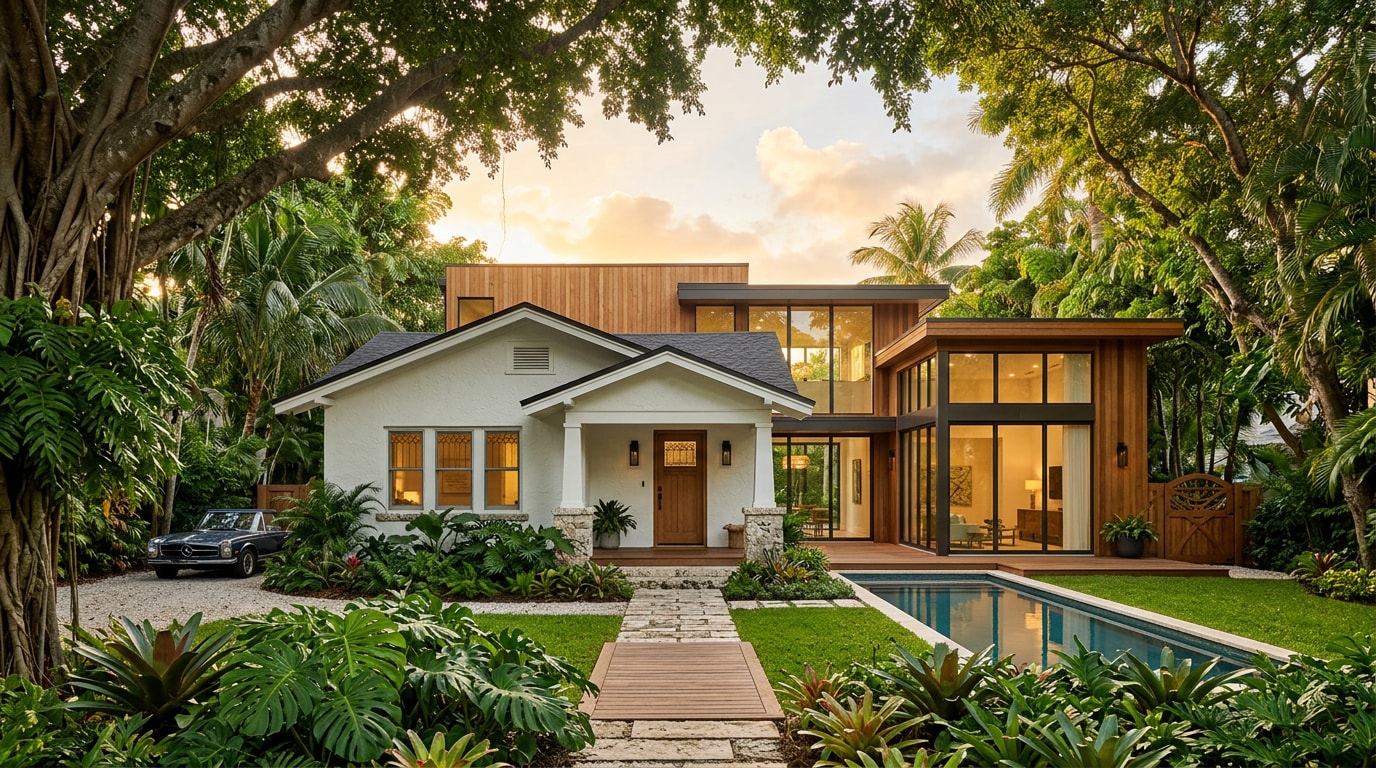
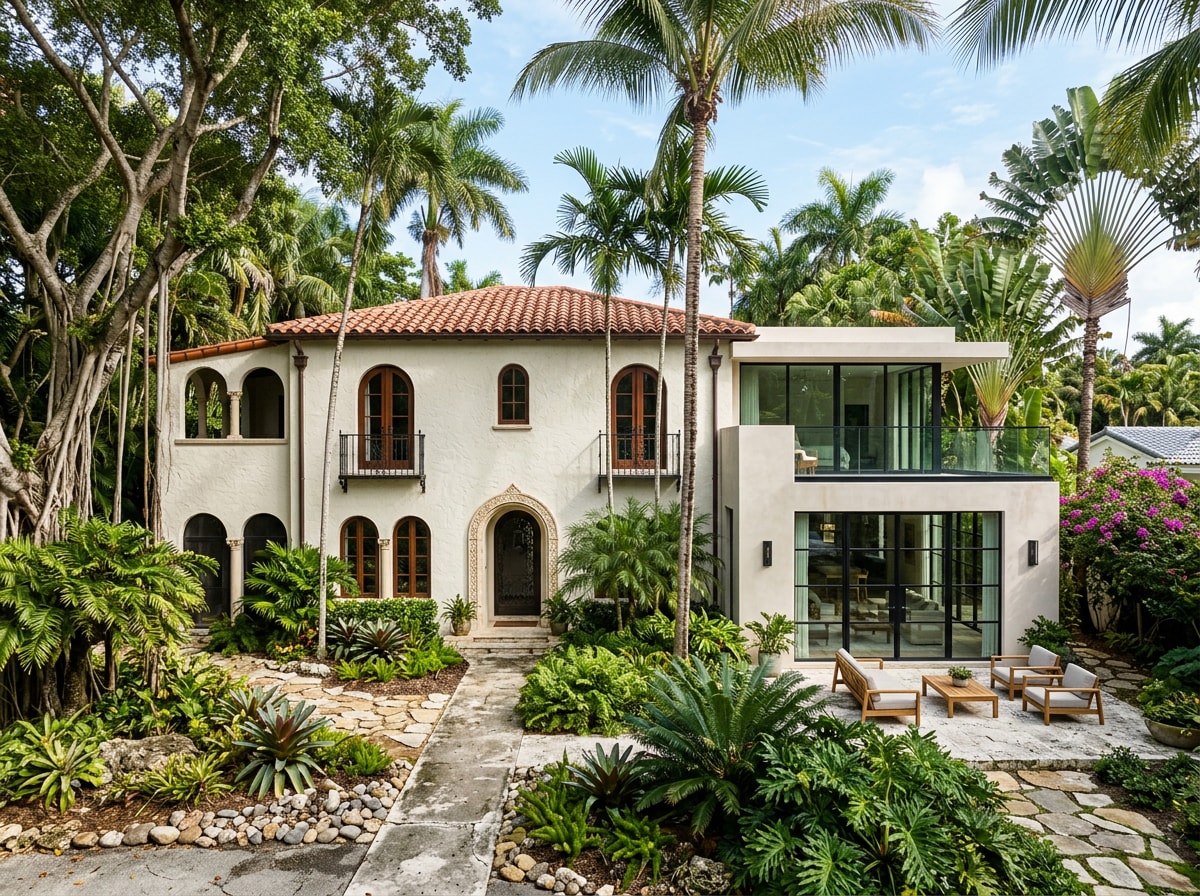
Coconut Grove blends historic bungalows, Mediterranean Revival homes, and mid-century modern infill, often within sight of each other. Whether the project involves updating a mid-century remodel or restoring a classic cottage, the strongest results come from choosing materials that enhance the property's existing character instead of fighting it.
Working with a designer who understands the area's architectural history tends to outperform importing a generic template from somewhere up the coast. A remodel also has to account for how each space gets used day to day. Storage, traffic flow, and material durability matter just as much as the finish selections on a mood board.
Ready to see how these trends look in a finished space? Browse our completed projects or visit Kitchen & Decor to start planning your own Coconut Grove remodel.
FAQ
What kitchen trends are most popular in Coconut Grove right now?
Tropical modern is the dominant look: natural wood cabinetry, slab or stone countertops, and large islands that open straight onto outdoor living space. Matte European-style cabinet fronts paired with warm wood tones are the most requested combination for 2026 projects.
How long does a high-end kitchen remodel in Coconut Grove typically take?
Most luxury kitchen transformations take 6 to 10 weeks once construction begins, not counting permit review. That window accounts for custom cabinetry production, stone fabrication, and City of Miami inspections.
What is a Neighborhood Conservation District (NCD)?
It's a zoning overlay with specific rules on lot coverage, setbacks, and green space designed to preserve a neighborhood's existing character. Much of Coconut Grove sits inside NCD-3, where single-family lot coverage is capped at 50% and green space minimums apply on top of standard T3 zoning.
Does the City of Miami or Miami-Dade County issue my remodeling permit?
If your property is inside Coconut Grove, it's almost certainly inside the incorporated City of Miami, which issues its own building permits. Miami-Dade County's RER only handles permits for unincorporated areas of the county, so don't default to the county portal without confirming jurisdiction first.
How does the tree ordinance affect my remodel?
Trees 18 inches in diameter or larger are protected, and removing more than 25% of a tree's canopy in a year requires a permit. The city is currently rewriting parts of this ordinance in 2026, so confirm current rules with the city before finalizing any site plan that affects root zones or canopy.
How much does it cost to remodel a home in Miami?
Costs vary widely by scope. Cosmetic updates run lower per square foot, while full gut renovations with structural changes cost considerably more. A project-specific estimate is the only reliable way to budget accurately; get a free estimate based on your actual floor plan and finishes.
About the Author
This guide was written by the design team at Kitchen & Decor, a Miami-Dade remodeling firm that has completed kitchen, bathroom, and whole-home projects throughout Coconut Grove's NCD-3 overlay and surrounding neighborhoods including Coconut Grove, Coral Gables, and Brickell. Questions about a specific property or permit situation? Contact us for a free estimate.