
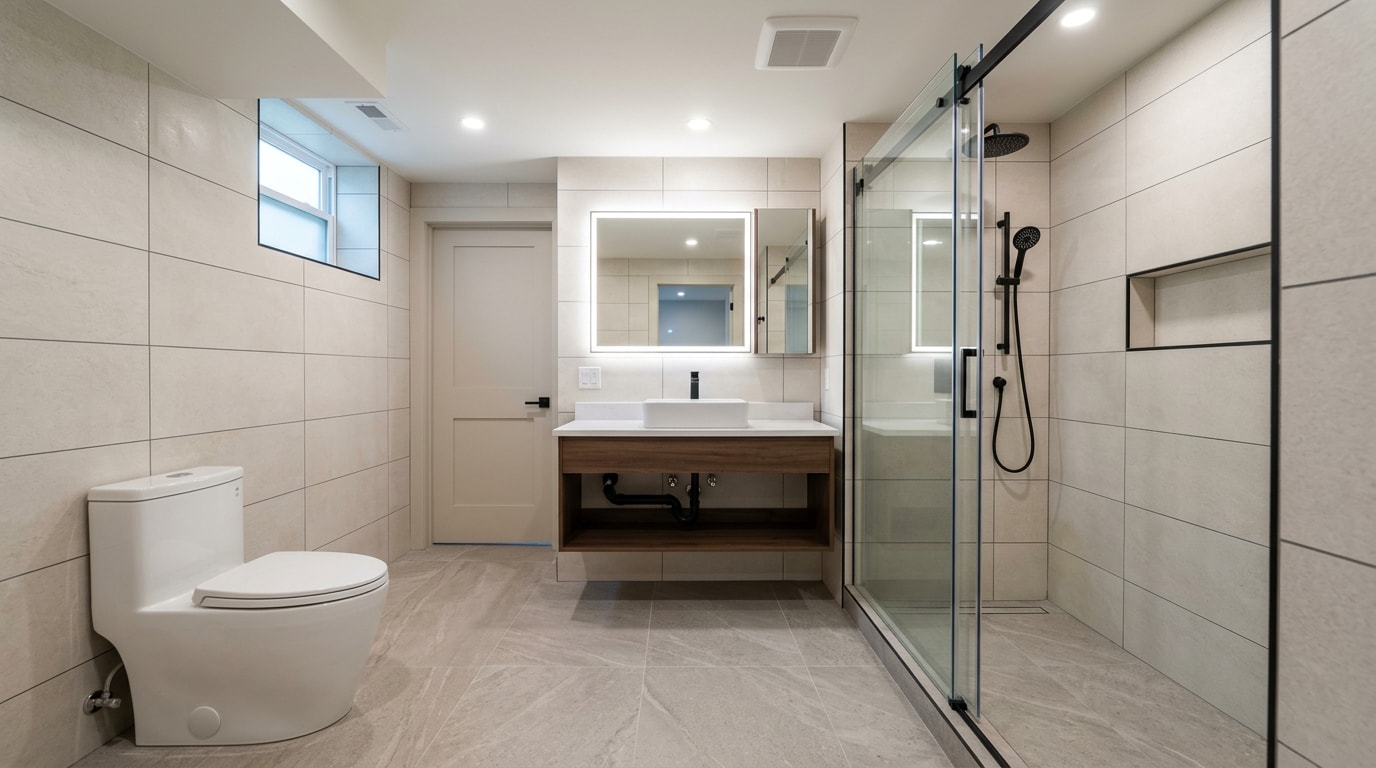
The cost to add a bathroom to a basement in Miami Beach, FL typically runs $8,000 to $40,000, and the number that applies to your home depends on one question most national guides skip: can the waste line drain by gravity, or does it need a pump? That single detail, driven by Miami Beach's notoriously shallow water table, is why local quotes often look nothing like the averages you find online. Below, we break down real price ranges, the drainage factor behind them, and what else moves your final bill.
How Much Does It Cost to Add a Bathroom to a Basement in Miami Beach, FL?
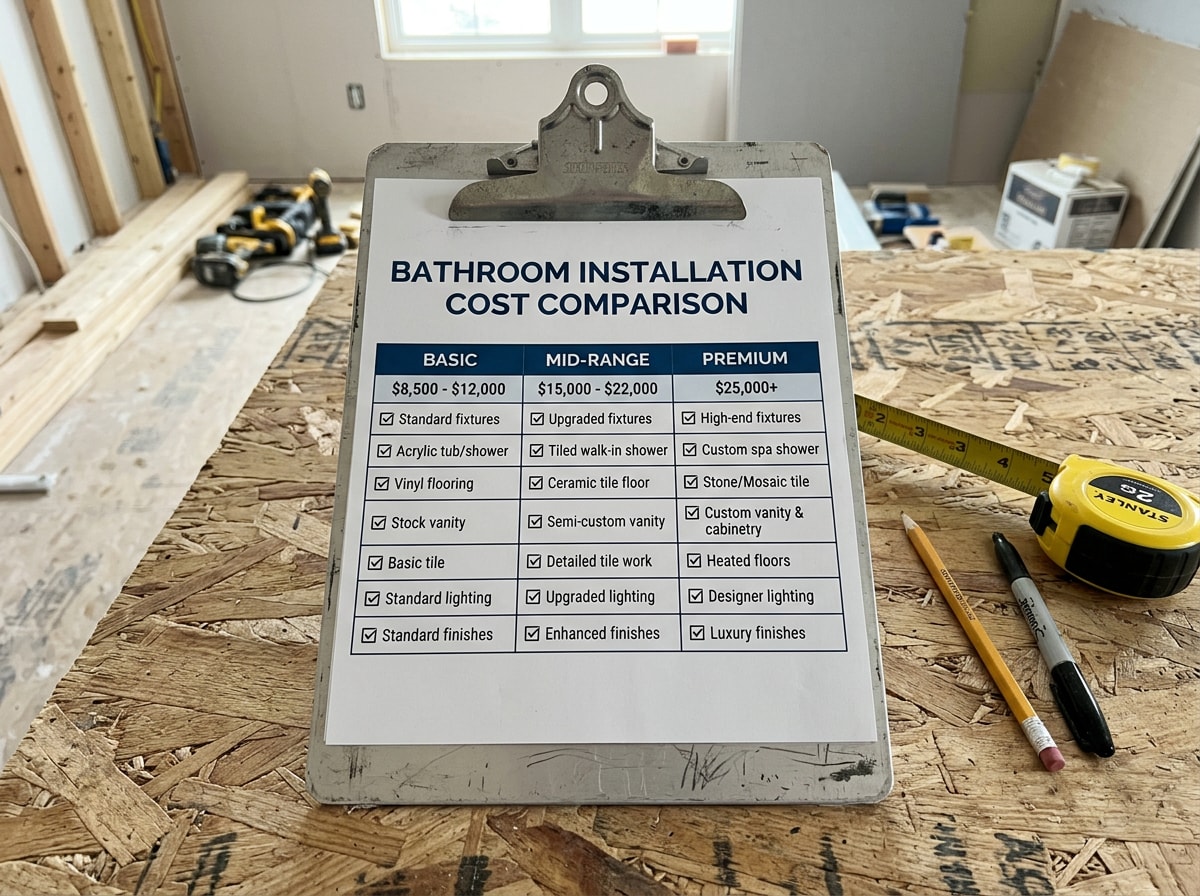
National guides, Florida-wide estimators, and local Miami Beach contractors each quote different numbers for the same type of project, and none of them explain why. Here's a side-by-side look at what you might actually pay, depending on scope and drainage method.
| Scope | National Average | Florida-Adjusted | Miami Beach Local Service |
|---|---|---|---|
| Half bath, existing rough-in | $5,000–$9,000 | $6,500–$11,000 | $8,000–$13,000 |
| Full bath, no rough-in | $15,000–$25,000 | $18,000–$30,000 | $20,000–$35,000 |
| Full bath with ejector pump | $18,000–$30,000 | $22,000–$35,000 | $25,000–$40,000 |
Labor rates run higher on a barrier island than inland, permit review adds its own cost, and ejector pump systems show up far more often here than in a typical national project. Treat these as planning ranges rather than quotes. Your actual cost will depend on the specifics below, so it's worth getting a free estimate before you lock in a budget.
Why Miami Beach's Water Table Changes the Math
A true basement, fully below ground with a gravity-fed sewer connection, is uncommon in Miami Beach. The city sits on a notably shallow water table, and engineers who design foundations across the region note that groundwater here sits at an average depth of only 2 to 6 feet below surface , which limits how deep anyone can safely excavate without specialized shoring. Most "basement bathroom" projects here actually involve a below-grade space such as a ground-level slab room, a partially sunken floor, or a walkout area rather than a classic Northern-style basement.
This distinction matters for cost because it decides whether wastewater can drain by gravity to the municipal sewer line or needs mechanical help getting there. In a lot of Miami Beach homes, the bathroom floor sits at or near the same elevation as the main sewer line, so gravity alone won't work without a pump assist.
In our experience scoping these jobs across the barrier island, the invert elevation question comes up on almost every below-grade bathroom quote we write here, more often than on comparable jobs inland. That single variable pushes a project from a standard renovation into a specialized plumbing job, and it brings waterproofing and drainage below grade into the budget conversation much earlier than a generic basement guide would suggest.
If you're weighing a below-grade bathroom against a full lower-level conversion, our living space renovation page covers the broader scope of turning underused space into usable square footage. For a sense of how plumbing-driven remodels price out elsewhere in South Florida, see our plumbing remodel guide for Pinecrest, FL.
Cost by Bathroom Type and Plumbing Scenario
A half bath typically costs the least since it skips the shower or tub and the extra plumbing that comes with it. A three-quarter bath, with a shower but no tub, sits in the middle. A full bathroom is the highest tier because it adds a tub/shower combo, more fixtures, and more rough-in work.
The bigger cost swing comes from what's already under your floor:
- Existing rough-in plumbing: You're mainly paying for fixtures, finishing, and connections, often the cheapest path.
- No existing rough-in: A contractor has to cut into the slab, run new supply and drain lines, and patch everything back, adding several thousand dollars before a single tile goes down.
- Ejector pump required: This happens when the bathroom sits below the elevation of the main sewer line, which is more common than homeowners expect given Miami Beach's low-lying lots. Expect ejector pump equipment, installation, and electrical tie-in to add $2,000–$6,000 on top of standard rough-in pricing.
Cost Breakdown by Component
Breaking a basement bathroom project into line items helps explain where the money actually goes:
- Plumbing rough-in: $2,500–$7,500, more if an ejector pump or macerating system is required
- Framing and walls: $1,500–$4,000
- Waterproofing and vapor barrier: $1,000–$3,500
- Flooring (moisture-resistant tile or vinyl): $800–$2,500
- Fixtures (toilet, vanity, shower/tub): $1,500–$6,000 depending on quality
- Exhaust fan and ventilation: $300–$900
- Electrical work: $600–$2,000
- Permits and inspections: varies by scope, see the permit section below
Fixture quality is where homeowners have the most control over final price. A builder-grade toilet and prefab shower surround keep costs near the low end. Custom tile and a freestanding vanity push the project toward the higher figures in each range. Our vanity installation and bathroom tile installation teams can walk you through where your money goes furthest.
Sewage Ejector Pump vs. Gravity Drain: Which Does Your Basement Need?
A gravity drain only works when the bathroom's waste line sits higher than the point where it connects to the main sewer. A sewage ejector pump is required whenever that's not the case, which is common in Miami Beach due to low lot elevations and a shallow water table. The pump collects wastewater in a sealed basin and pushes it up and out to the sewer line.
Macerating or up-flush systems are a smaller, less powerful alternative, often used for half baths where a full ejector pump isn't necessary. They cost less upfront but generally handle lower volumes and may not be approved for every fixture combination.
Whether your bathroom needs a pump isn't something to guess at. A licensed plumber should check your home's sewer line elevation before you finalize a layout. Florida doesn't follow the Uniform Plumbing Code that some other states use; its plumbing code is based on the International Plumbing Code published by the ICC, not the Uniform Plumbing Code . The International Code Council's IPC overview outlines exactly when a mechanical ejector system is required versus optional under that code family.
What Else Affects the Cost of a Basement Bathroom
Beyond bathroom type and drainage method, your final number moves based on material choices, how much of the existing space needs reworking, and local labor availability.
Plumbing Fixtures Below Grade (Bathroom or Kitchen Additions)
Adding below-grade plumbing fixtures costs noticeably more than cosmetic work like flooring or paint, because any new toilet, sink, or shower drain below the main sewer line likely needs specialized plumbing to function. This holds true whether you're adding a bathroom or a wet bar in the same space; any fixture requiring a drain triggers the same ejector pump or macerator conversation. If you're planning both a bathroom and a secondary kitchen area downstairs, it often makes sense to combine the plumbing work into a single rough-in phase to avoid paying for two separate mobilizations.
Waterproofing and Moisture Control
Before framing or tiling begins, a below-grade bathroom in Miami Beach typically needs a vapor barrier or crystalline waterproofing coating applied to walls and floors close to or below the water table. Skipping this step is one of the most common causes of mold and tile failure in basement bathrooms built in high-moisture climates.
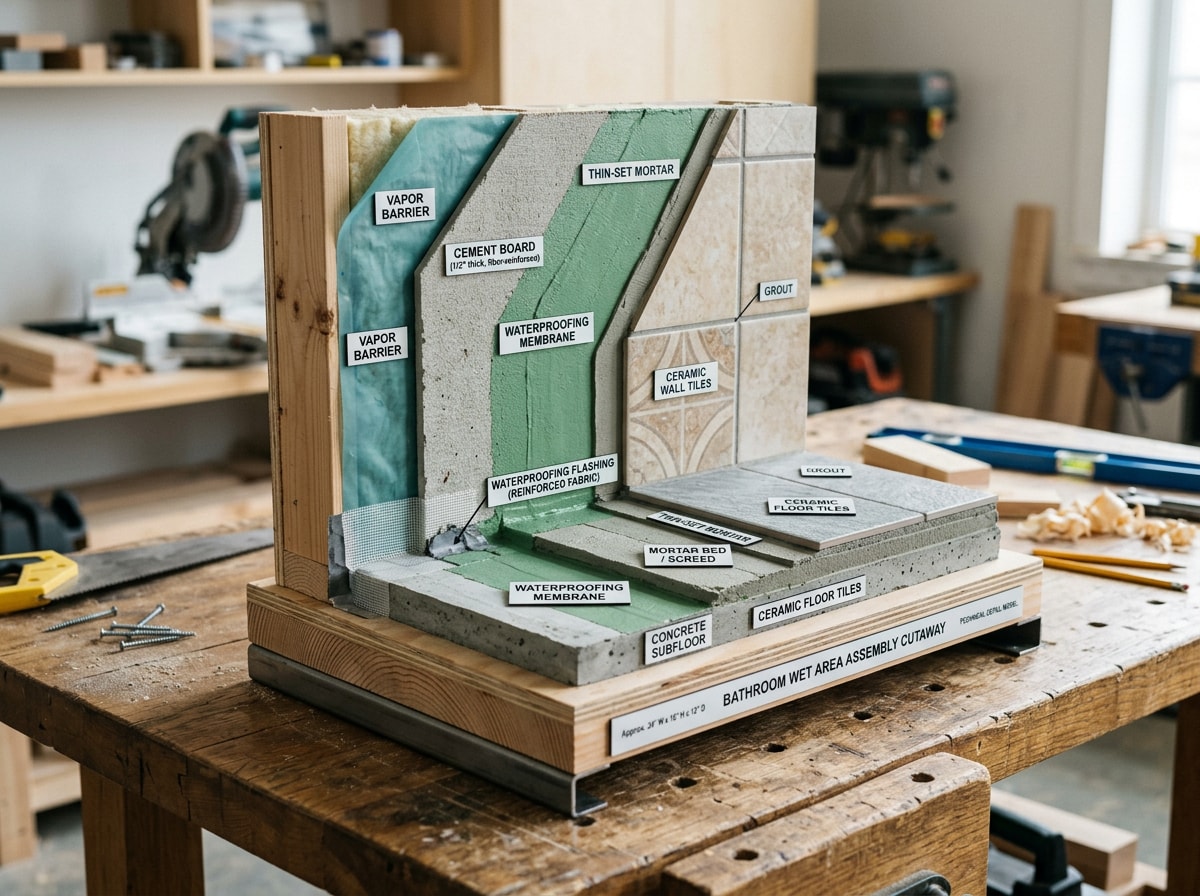
Moisture-resistant materials matter just as much as the barrier itself:
- Cement board instead of standard drywall
- Vinyl or porcelain tile instead of laminate
- Mold-resistant paint on all exposed surfaces
Because a below-grade bathroom usually has no exterior wall for a window, it also needs a dedicated exhaust fan vented to the outside, not into an attic or crawlspace, to manage humidity after every shower. Given the water table context above, this step isn't optional in Miami Beach the way it might be treated as an upgrade elsewhere. Our shower installation and bathroom fixture replacement crews build moisture control into every below-grade job from the start.
Permits and Code Requirements
Plumbing, electrical, and framing work for a basement bathroom addition all require permits and inspections in Miami Beach, and skipping them creates real resale liability. Buyers' inspectors routinely flag unpermitted bathrooms, which can stall a sale or force costly retroactive permitting.
Permit costs for this type of project generally range from a few hundred dollars to a couple thousand, depending on scope, whether an ejector pump or subpanel work is involved, and how many trades need separate sub-permits. The Miami Beach Building Department, which is dedicated to serving the public through efficient and effective supervision and regulation of construction activities , is the authority to confirm exact fees with before finalizing your plans. You can review current requirements directly on the City of Miami Beach Building Department site.
If you'd rather not manage permitting yourself, our home remodeling consultation folds applications and inspection scheduling into the planning phase, so nothing stalls your timeline. Homeowners in nearby Miami Beach projects often start here before committing to a full scope of work.
FAQ
How long does it take to add a bathroom to a basement?
A typical timeline runs 3–6 weeks once permits are approved: about one week for rough-in plumbing and electrical, one to two weeks for framing and waterproofing, and one to two weeks for finishing work like tile, fixtures, and paint. Permit approval itself can add two to six weeks depending on your project's review queue, so plan for that separately from construction time.
Can I add a bathroom to a below-grade space in Florida?
Yes. It's achievable in almost all cases, typically by installing an ejector pump system when gravity drainage isn't possible due to sewer line elevation. This is standard practice across South Florida and doesn't disqualify a below-grade space from getting a bathroom; it simply adds the pump equipment and installation cost covered above.
Is a basement bathroom worth it?
In Miami Beach, that often comes down to how you'll use the space. A below-grade bathroom supporting a guest suite, home office, or rental unit can meaningfully boost everyday usability and even rental income. Whether it's worth it for pure resale ROI is harder to generalize, since appraisal value varies by neighborhood and comparable sales, so weigh usability alongside resale expectations.
Do I need a permit to add a bathroom to a basement?
Yes. The plumbing, electrical, and framing work involved all require permits. See the Permits and Code Requirements section above for cost context, and confirm exact local requirements before you start.
What's the cheapest way to add a bathroom to a basement?
Build where rough-in plumbing already exists and the bathroom sits above the sewer line's elevation, so gravity drainage works without a pump. Pairing a half bath with builder-grade fixtures and a prefab shower surround keeps costs near the low end of the ranges above.
Ready to find out what your specific layout and drainage situation will cost? Get a free estimate from a team that prices Miami Beach's water table into the quote from day one, not after the slab is already cut. You can also browse recent work on our homepage before you reach out.