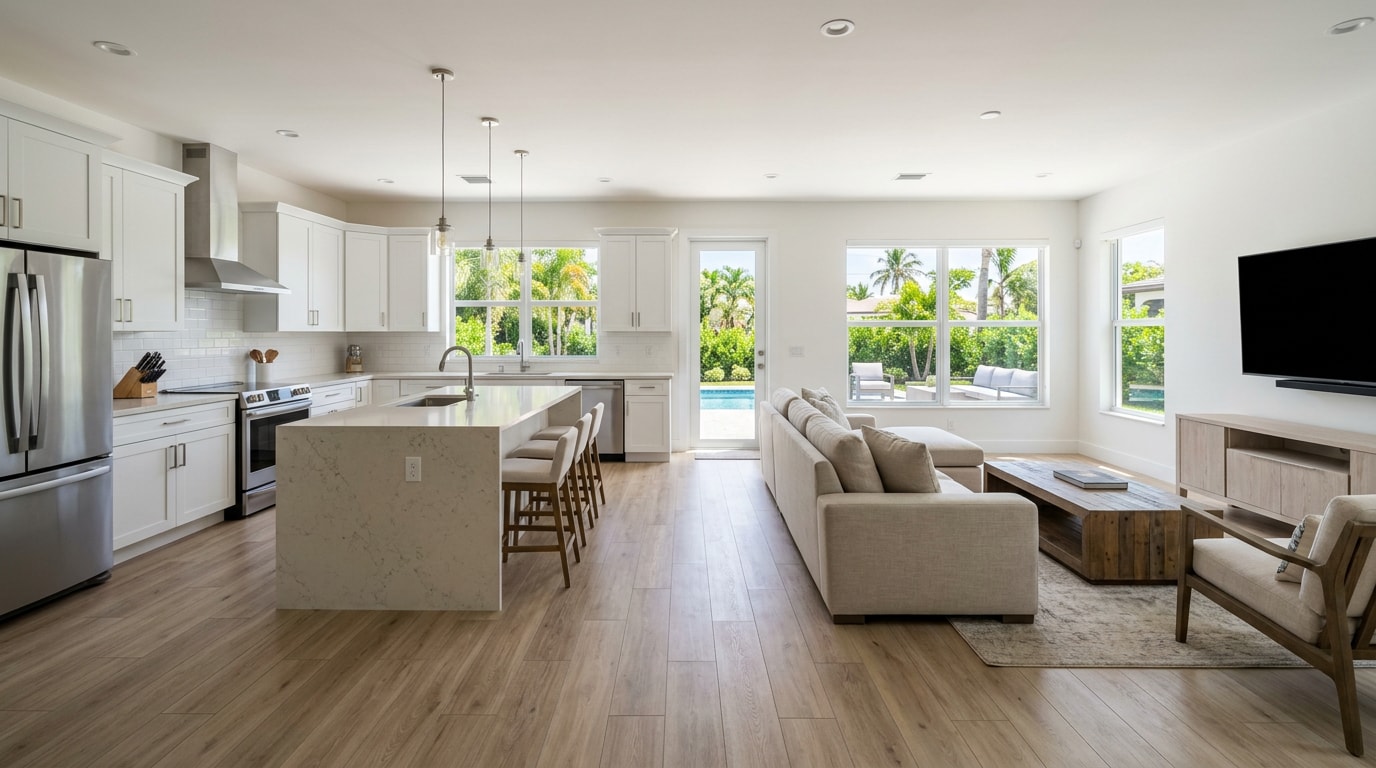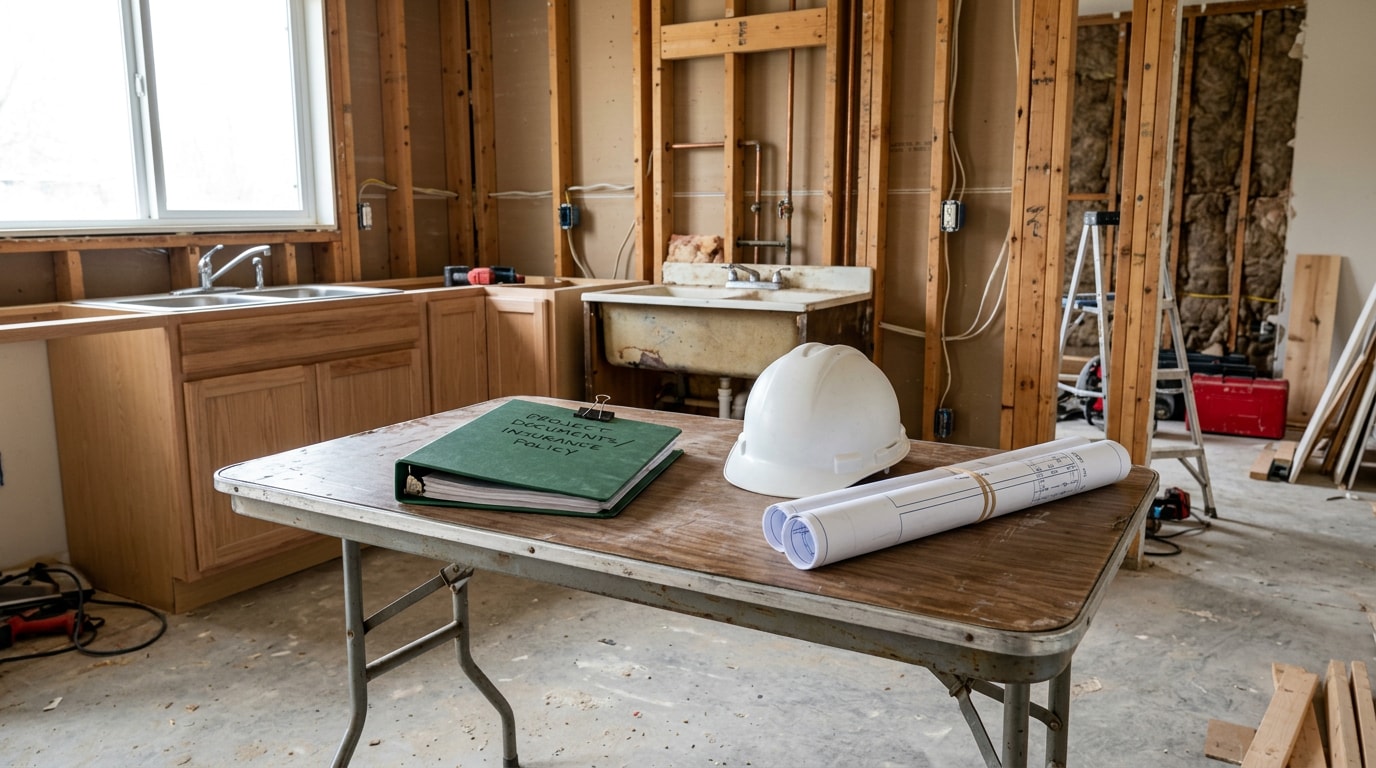
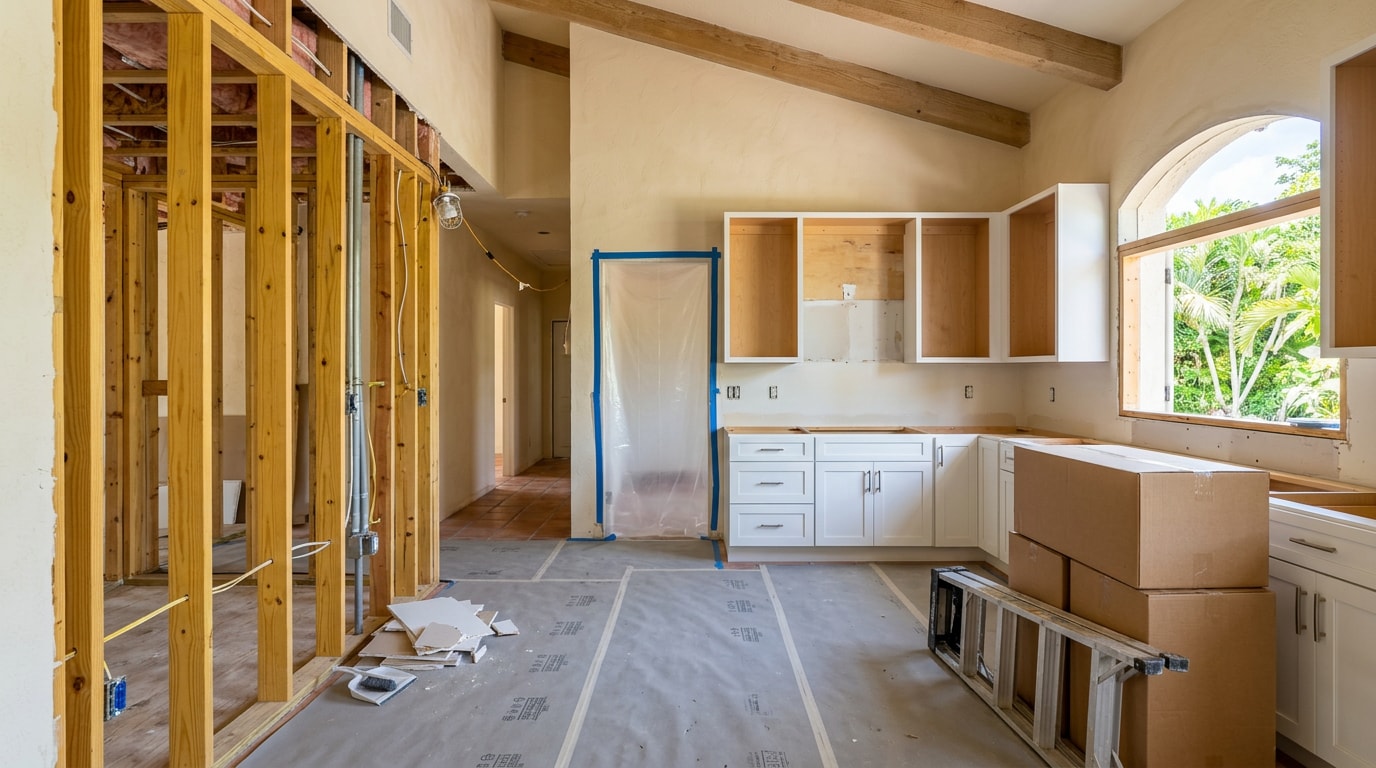
A kitchen renovation timeline in Coral Gables, FL typically runs 10 to 20 weeks from signed contract to final walkthrough, but the real number depends on scope, permitting, and a few local review layers that don't apply everywhere else in Miami-Dade County. This guide walks through the actual phases, the delays that catch homeowners off guard, and how to plan around both the city's regulations and South Florida's weather.
How Long Does a Kitchen Renovation Take in Coral Gables, FL?
Most kitchen renovations in Coral Gables take between 10 and 20 weeks from signed contract to final walkthrough, though published estimates vary widely. The right number for your project depends heavily on scope: a cosmetic refresh might wrap in a few weeks, while a full layout change with permitting can stretch past four months.
That spread exists because "kitchen remodel timeline" means something different depending on who's answering. A quick comparison makes the pattern clear:
| Scope | Typical Range | What Drives the Number |
|---|---|---|
| Cosmetic refresh | 6–12 weeks | Paint, hardware, countertop swap — minimal construction, no permit |
| Full remodel, same layout | 10–16 weeks | New cabinets, counters, appliances; plumbing and electrical stay put |
| Full remodel with layout change | 4–7 months | Wall removal, moved plumbing/electrical, full permit review |
If you're still mapping out what your project should even include, starting with a broader look at kitchen and interior remodeling services can help narrow down scope before you start pricing out a schedule.
Cosmetic Refresh
A cosmetic refresh covers surface-level changes only: new paint, updated hardware, a countertop swap, or a backsplash replacement without touching plumbing or electrical lines. Because nothing structural moves, there's typically no permit required and no inspection schedule to work around.
This is the shortest version of any kitchen renovation timeline, often finishing in six to eight weeks once materials arrive. A minor kitchen update like this is popular for homeowners who want a visual lift before selling or who aren't ready for a full gut renovation yet.
Full Remodel, Same Layout
A full kitchen remodel that keeps the existing footprint replaces cabinets, countertops, appliances, flooring, and sometimes lighting, without moving the sink, stove, or major electrical runs. Because the plumbing and electrical stay in their original locations, the permitting process is generally more straightforward than a layout change.
This same layout kitchen renovation still involves real construction: demolition, rough-in work, inspections, and installation. It just avoids the structural review and extended plan-check time that comes with reconfiguring the room, which keeps the overall timeline closer to three to four months in most cases.
Layout Change
Moving a sink, relocating gas or electrical lines, or removing a wall between the kitchen and another room changes the project category entirely. A kitchen layout change requires more detailed permit drawings, often including structural or engineering review, before any demolition can begin.
Moving plumbing in a kitchen remodel also means coordinating rough-in inspections before walls close back up, which adds sequencing steps that a same-layout project skips. These extra review and inspection cycles are the main reason layout changes push a project toward the longer end of any published range, a point worth remembering before falling in love with an open-concept redesign.
Kitchen Renovation Phases: What to Expect Week by Week
Every kitchen renovation moves through the same basic sequence, regardless of scope: planning, permitting, ordering, demolition, construction, and final finishing. Understanding the kitchen remodel phases in order makes it easier to spot where delays tend to creep in. For a closer look at what's involved at each stage, the kitchen remodeling services page outlines the scope of work typically covered.
Consultation, Design, and Material Selections
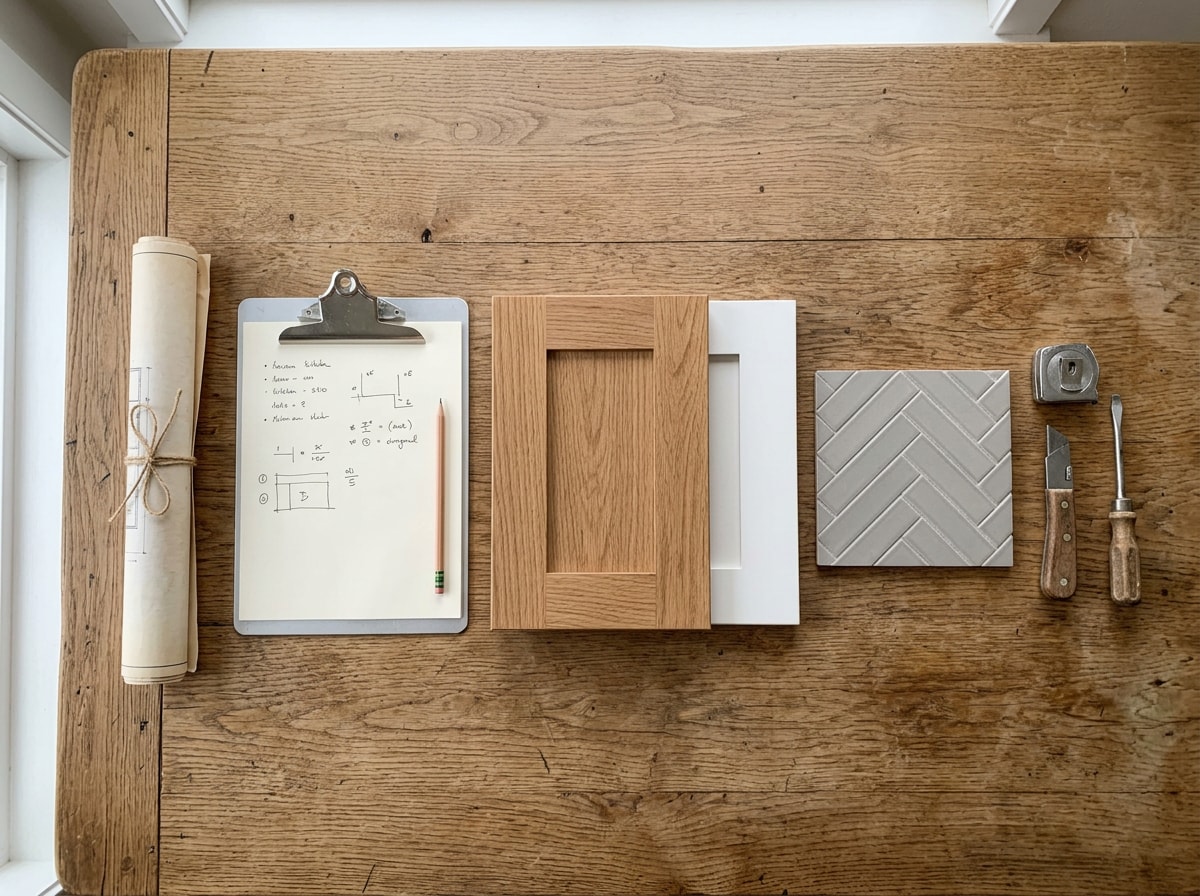
The first phase usually runs two to four weeks and covers the initial consultation, measuring the space, and finalizing a design concept. This is also when cabinet styles, countertop materials, and appliance models need to be locked in.
Appliance specs matter earlier than most homeowners expect. Cabinet makers build boxes around exact appliance dimensions, so changing a refrigerator model after cabinets are ordered can mean reordering pieces and losing weeks. Treating the design phase and material selections as a single decision point, not two separate steps, keeps the rest of the kitchen renovation process on track.
Permits and Approvals
Any work touching plumbing, electrical, gas lines, or structural elements requires a kitchen remodel permit before construction starts. Cosmetic-only projects, such as paint, hardware, or a like-for-like countertop swap, typically don't trigger this requirement.
Permit review times vary by submittal volume and plan complexity, and homeowners should expect several weeks for review and approval, longer if revisions are requested. Checking current processing times and requirements directly with Miami-Dade County's building department before finalizing a schedule helps set realistic expectations, since review volume shifts throughout the year. Because the exact timeline depends on your specific property, it's worth getting a free estimate early so a contractor can flag any review requirements before you lock in a completion date.
Ordering Cabinets and Materials
Cabinet lead times are often the single longest line item in the entire project, frequently longer than the construction itself. Custom and semi-custom cabinets can take anywhere from six to fourteen weeks to manufacture and ship, depending on the line and finish selected.
Because of this, material procurement should start the moment the design is finalized, ideally while permits are still under review rather than after. Ordering kitchen cabinets early lets that lead time run in parallel with permitting instead of adding to it, which is one of the simplest ways to shorten a published timeline.
Demolition and Rough-In Work
Kitchen demolition itself is fast. Most kitchens come down to studs and subfloor within two to five days. What takes longer is what comes after: rough-in plumbing and electrical work, which has to pass inspection before walls and cabinets can close back in.
Inspections can pause a project for a day or more depending on inspector scheduling, and failed inspections mean correcting the issue and scheduling a re-inspection. This stage, not demolition, is usually where a realistic kitchen renovation timeline either holds steady or starts slipping.
Installation, Countertops, and Final Walkthrough
Once rough-in passes inspection, drywall, flooring, and cabinet installation move forward, generally over one to two weeks. Countertops come next, but they require an in-home template measurement after cabinets are set, followed by a fabrication lag, often one to three weeks before the finished slab is ready to install.
After countertops go in, backsplash, fixtures, and appliances get connected, including any kitchen island installation work if the design calls for one. A final walkthrough and punch list close out the project, giving the homeowner a chance to flag any touch-ups before calling the kitchen complete.
Permits and Approvals in Coral Gables
Coral Gables adds regulatory layers beyond a standard Miami-Dade kitchen permit, particularly for homes in designated districts or flood-prone zones. These extra review steps are the biggest reason a Coral Gables project can run longer than a comparable remodel elsewhere in the county. Homeowners working on a property in Coral Gables should ask early whether either of the following applies.
The Board of Architects: Where the Window Changes Everything
Coral Gables' Board of Architects reviews exterior-visible changes to a property, and this review can apply even when the work inside is "just a kitchen." The board was created to ensure the city's architecture stays consistent with its regulations and preserves the community's traditional aesthetics , so a renovation that changes windows, alters the façade, or touches any element visible from the street may need its approval before a building permit is issued.
This review step runs separately from standard plan review and adds its own meeting and approval cycle to the schedule. Homeowners in Coral Gables' historic and aesthetically-controlled districts should factor this in before assuming their project will move at the same pace as a comparable remodel in an unrestricted part of Miami-Dade.
Because this review is specific to Coral Gables rather than a countywide requirement, it's easy to miss if a contractor's experience is mostly outside the city. Confirming scope and exterior impact with the City of Coral Gables Board of Architects early in the design phase avoids a late surprise that stalls an otherwise finalized plan.
Flood Zones: The 50% Rule Counts Your Kitchen
Properties in designated flood zones are subject to a substantial-improvement rule: if the cost of improvement equals or exceeds 50 percent of the structure's pre-improvement market value, the building generally must be brought up to current floodplain management standards, not just the renovated room. A kitchen project's cost counts toward that threshold even though the work itself doesn't touch flood protection directly.
This matters more in Coral Gables than it might elsewhere, given the number of properties near waterways and canals in and around the city. Crossing that threshold can trigger additional review and, in some cases, require elevation or structural upgrades well beyond the kitchen's original scope, adding real time to the project.
Confirming a property's flood zone designation and current improvement value early, rather than after permits are submitted, prevents this rule from becoming a late-stage shock. FEMA's guidance on substantial improvement and substantial damage explains how the calculation works and what it can trigger for property owners in mapped flood zones.
Why Do Kitchen Remodels Take Longer Than Expected?
Most of the gap between a homeowner's expected timeline and the real one comes down to three recurring issues:
- Permitting takes longer than assumed. A project that budgets for a two-week approval can easily see four to six instead once revisions or multiple trade reviews are involved.
- Materials arrive later than promised. Cabinet and appliance lead times quoted at the point of sale sometimes stretch once an order is actually placed, especially for specialty finishes.
- Older homes reveal hidden problems. Homes built decades ago, including many of the older Coral Gables homes homeowners are now updating, often hide outdated wiring, old plumbing, or water damage behind walls that only becomes visible during demolition.
None of this means a kitchen renovation timeline is unreliable. It means the realistic version of that timeline includes buffer time for the things that can't be confirmed until the project is underway. Treating published ranges as a starting point, not a fixed promise, sets expectations that match how these projects actually unfold.
What Causes Delays in a Kitchen Renovation Timeline
A handful of issues account for most kitchen remodel delays, and they tend to repeat across projects regardless of contractor or budget. Knowing them in advance makes it easier to plan around them rather than react to them mid-project.
Late or Changed Selections
Changing a tile pattern, cabinet finish, or appliance model after an order has been placed resets that item's lead time from zero. Even a seemingly small swap, such as switching a cooktop brand, can mean weeks of delay if the cabinet opening or electrical rough-in was built around the original spec.
Locking in selections before demolition starts, rather than refining them along the way, is one of the most effective ways homeowners can protect their own schedule.
Permit Review and Inspections
Permit review backlogs and failed inspections are a common source of lost time, separate from the initial approval window covered earlier. A failed inspection, often for a code detail as minor as outlet spacing or venting, requires a correction and a re-inspection before work can continue.
Building in a few extra days around each inspection point, rather than assuming a pass on the first try, keeps a tight schedule from unraveling over a fixable detail.
Cabinet and Material Lead Times
In-stock or semi-custom cabinet lines generally ship faster than fully custom cabinetry, sometimes by several weeks. A custom cabinet lead time can run well past two months depending on the manufacturer and finish, while stock lines may ship in three to four weeks.
Ordering as soon as the design is final, rather than waiting until permits clear, lets that lead time overlap with other phases instead of stacking onto the end of the project.
Hurricane Season
The Atlantic hurricane season runs from June 1 to November 30 , and it can affect a renovation in more than one way: material shipments slow down ahead of storms, crews may be pulled to emergency repair work, and inspections can be rescheduled around severe weather. A project timed to start in late summer carries more schedule risk than one that starts during the dry months.
This doesn't make a summer start impossible, but it's worth planning extra buffer time into any renovation scheduled during the season. The National Hurricane Center's official Atlantic season climatology is a useful reference point when mapping a project calendar.
Living Through a Kitchen Renovation
Most homeowners stay in their home during a kitchen renovation, which raises a different set of day-to-day questions than the timeline itself. Dust control, daily cleanup, and meal logistics all matter once construction actually starts.
How Do You Protect My Home From Dust?
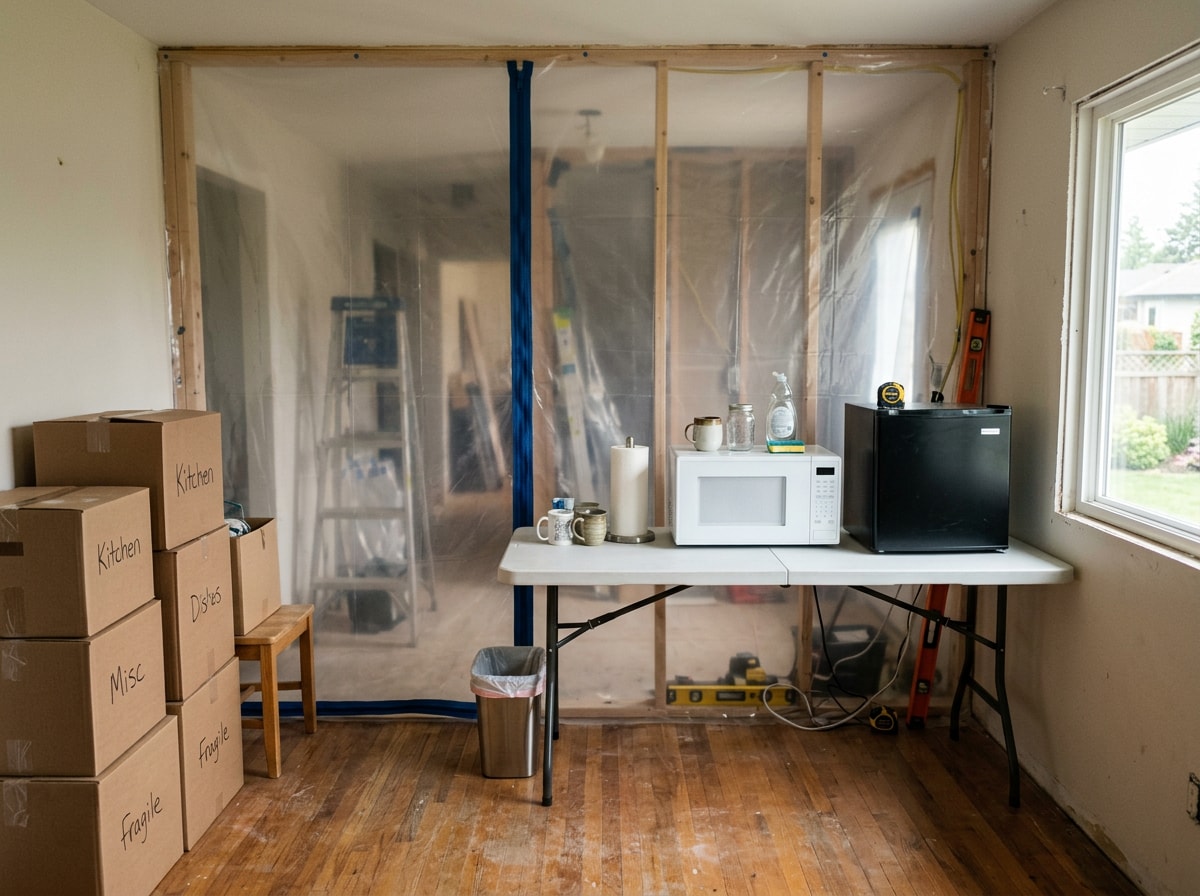
Dust containment typically involves sealing the work area with plastic sheeting or zip walls and, on larger projects, using negative air machines to pull dust out of the workspace rather than letting it spread through the house. These measures won't eliminate dust entirely, but they significantly limit how far it travels into living areas.
Asking a contractor directly what containment methods they use before work begins is a reasonable and common question, not an unusual one.
Will You Clean Up Every Day?
Daily job-site cleanup is a standard expectation worth confirming up front rather than assuming. Most reputable renovation crews sweep up debris, secure tools, and tidy the work area at the end of each day, even on multi-week projects.
Setting this expectation in writing before the project starts avoids confusion later about what "clean" means to each side.
Set Up a Temporary Kitchen
A basic temporary kitchen usually includes a microwave, a mini-fridge, and a folding table set up in a garage, dining room, or another open space. It's not a full kitchen replacement, but it covers simple meals for the weeks when the main kitchen is out of commission.
Planning this setup before demolition day, rather than scrambling after the sink disappears, makes the living-through-it phase noticeably less stressful.
Seasonal Considerations for Timing Your Coral Gables Kitchen Renovation
South Florida's dry and wet seasons affect more than comfort. They influence material delivery, crew scheduling, and how smoothly a Coral Gables kitchen renovation moves from start to finish.
Best Times to Renovate
The dry season, roughly November through April, is generally the preferred window for renovation work in South Florida. Lower rainfall and reduced storm risk mean fewer weather-related delays on deliveries and fewer rescheduled site visits.
Starting a project outside this window isn't a dealbreaker, but it does mean building in more schedule flexibility, particularly for any exterior work or deliveries that depend on clear weather.
Holiday Considerations
Scheduling a project around November and December holidays can stretch an otherwise on-track timeline. Contractor availability often tightens as crews take time off, and material shipping can slow during peak holiday shipping periods.
A project that starts in early fall with a completion date that lands mid-December, for example, may need an extra buffer built in simply to account for reduced availability during that stretch.
How to Keep Your Kitchen Renovation on Schedule
A few homeowner-side habits do more to protect a timeline than any single contractor decision:
- Finalize all selections before demolition starts. Tile, cabinet finish, hardware, and appliances should be locked in first, since this removes the single biggest source of mid-project delay.
- Order cabinets and appliances as soon as the design is locked, rather than waiting for permits to clear, so that lead time runs in parallel instead of adding to the schedule.
- Respond quickly to decision requests during construction. A two-day delay answering a question about outlet placement can turn into a full week lost if it falls right before an inspection deadline.
- Keep a single point of contact for selections and approvals, instead of routing decisions through multiple people, to cut down on miscommunication that slows a project down.
None of these steps guarantee a specific number of weeks, since every property and permit office moves at its own pace. But they consistently separate renovations that finish close to their original estimate from ones that drift well past it. If you want a realistic schedule for your own home before you commit to a start date, request a free estimate and walk through scope, permitting, and material lead times together.
FAQ
What Is the Typical Timeline for a Kitchen Renovation?
A typical kitchen renovation takes 10 to 20 weeks from contract signing to final walkthrough, though the exact number depends on scope. Cosmetic updates finish faster, often in 6 to 12 weeks, while layout changes involving plumbing or structural work can take four to seven months.
Do I Need a Permit to Remodel My Kitchen in Coral Gables?
It depends on scope. Cosmetic work like paint, hardware, or a countertop swap generally doesn't require a permit, but any project involving plumbing, electrical, gas lines, or structural changes does, and in Coral Gables, exterior-visible changes may also need Board of Architects review.
Can I Live in My House During a Kitchen Remodel?
Yes, most homeowners stay in their home throughout the renovation. Setting up a temporary kitchen area with a microwave, mini-fridge, and folding table, as covered earlier, makes daily life manageable while the main kitchen is under construction.
When Should I Order Cabinets and Appliances?
Order cabinets and appliances as soon as the design is finalized, ideally while permits are still under review. Cabinet lead times are often the longest single item in the project, so ordering early lets that wait run alongside other phases instead of extending the overall timeline.
How Long Does a Kitchen Remodel Permit Take in Miami-Dade?
It varies. Review time depends on how many trades the project touches (building, electrical, plumbing, mechanical) and the current workload at the building department, so a simple cosmetic permit clears faster than one tied to a full layout change. Checking current processing times with the county's building department before setting a start date is the most reliable way to plan around this.