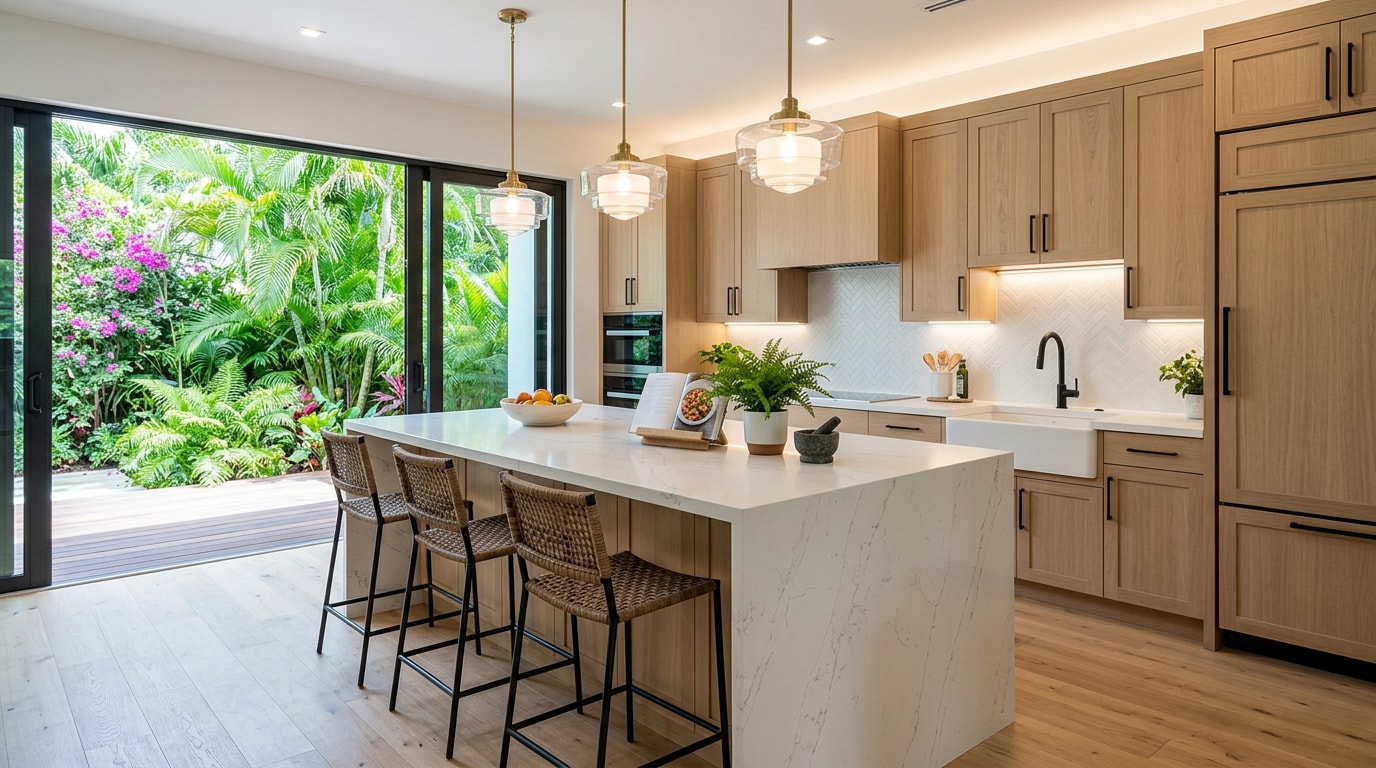
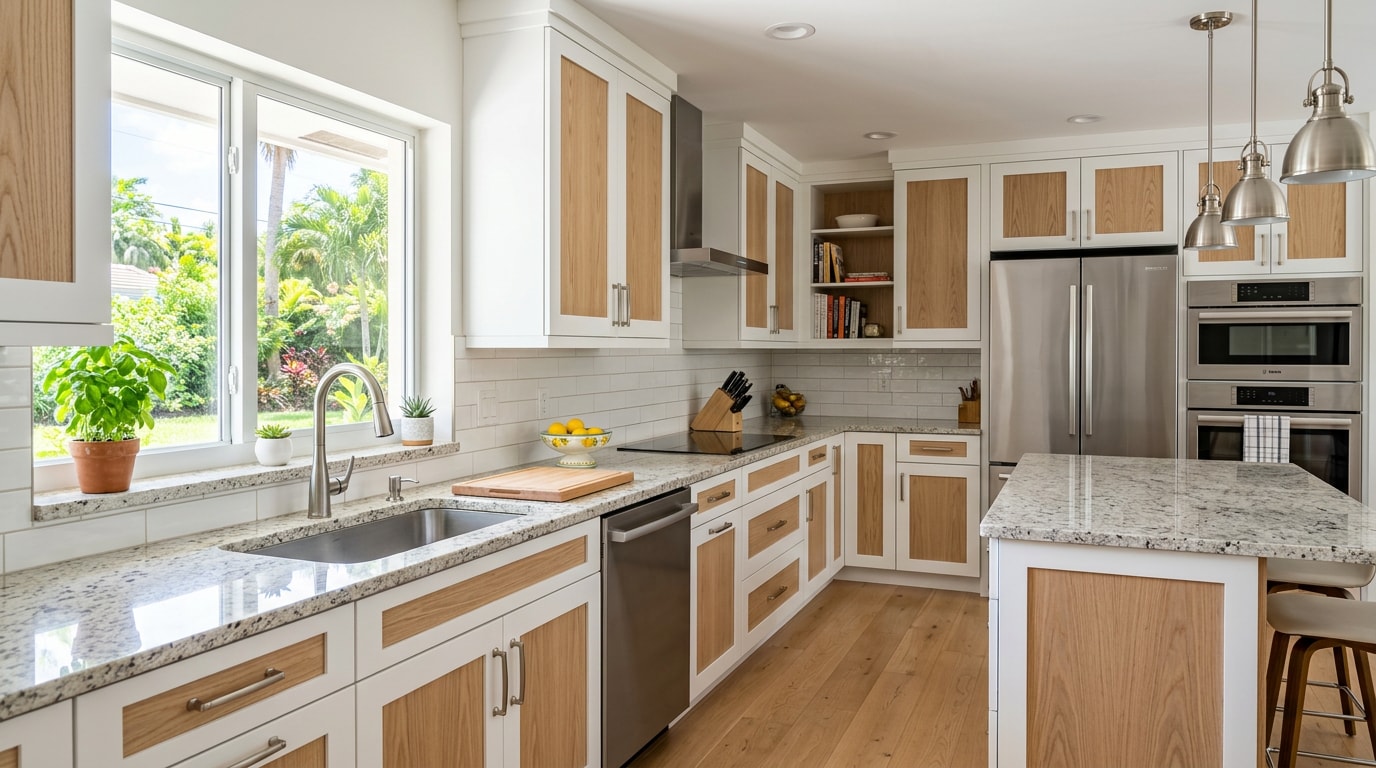
Cabinet refacing in Miami Springs lets you update worn, dated cabinets without touching the boxes, the plumbing, or your budget for a full remodel. If the layout of your kitchen already works and the boxes are solid, refacing can deliver a near-total visual transformation in days instead of weeks. This guide covers 2026 pricing, material choices, a new Florida permit rule that affects small projects, and how to tell if refacing is the right call for your kitchen.
Visit Kitchen and Decor Center Corp to see our services and request a free estimate.
What Is Cabinet Refacing?
Cabinet refacing is a cosmetic kitchen upgrade that covers or replaces your cabinet doors, drawer fronts, and face-frame surfaces with new material while keeping the existing cabinet boxes in place. It's a faster, lower-cost alternative to replacing cabinets entirely, since your kitchen's structure and layout stay exactly the same.
Refacing doesn't touch the layout or internal cabinet structure. Plumbing, electrical, and the boxes themselves stay put. A contractor applies new veneer, laminate, or solid wood to the visible surfaces, then swaps in new doors, drawer fronts, and hardware. For homeowners who want to update a kitchen without tearing it out entirely, refacing is one of the fastest ways to get there.
How Much Does Cabinet Refacing Cost in Miami Springs in 2026?
Most standard kitchens (around 18 to 22 linear feet of cabinets) run $4,000 to $9,000 for a full refacing project, including new doors, drawer fronts, veneer or laminate surfacing, and hardware. Full cabinet replacement for the same kitchen typically starts around $15,000 and climbs fast with custom cabinetry.
Several factors move your final number up or down:
- Kitchen size – A small galley kitchen may need only 10-12 linear feet of refacing, while a kitchen with an island can push past 30 linear feet.
- Material choice – Laminate costs less than wood veneer, which costs less than solid wood doors.
- Hardware upgrades – Soft-close hinges and new pulls add to the total but improve daily function.
- Prep work – Heavy sanding, repairs to damaged face frames, or rebuilding drawer boxes add labor hours.
- Local humidity demands – South Florida's climate pushes many homeowners toward moisture-resistant laminate or sealed wood veneer, which typically costs more than materials built for drier regions.
Florida is also one of the most active remodeling markets in the country right now. Florida captures 5.5% of national remodeling spending, or roughly $15.4 billion , which keeps contractor demand and labor rates in Miami-Dade running above the national median. Getting two or three on-site quotes is the most reliable way to pin down an exact number for your kitchen. Our custom cabinet installation page outlines what's typically included in a refacing project, or you can request a free estimate directly.
| Factor | Painting | Refacing | Full Replacement |
|---|---|---|---|
| Typical cost (20 linear ft kitchen) | $1,500 – $3,500 | $4,000 – $9,000 | $15,000 – $30,000+ |
| Typical timeline | 3 – 5 days | 3 – 7 days | 3 – 6 weeks |
| Changes layout? | No | No | Yes, if desired |
| Box condition required | Any | Sound, dry boxes | Not applicable |
Cabinet Refacing Materials Compared
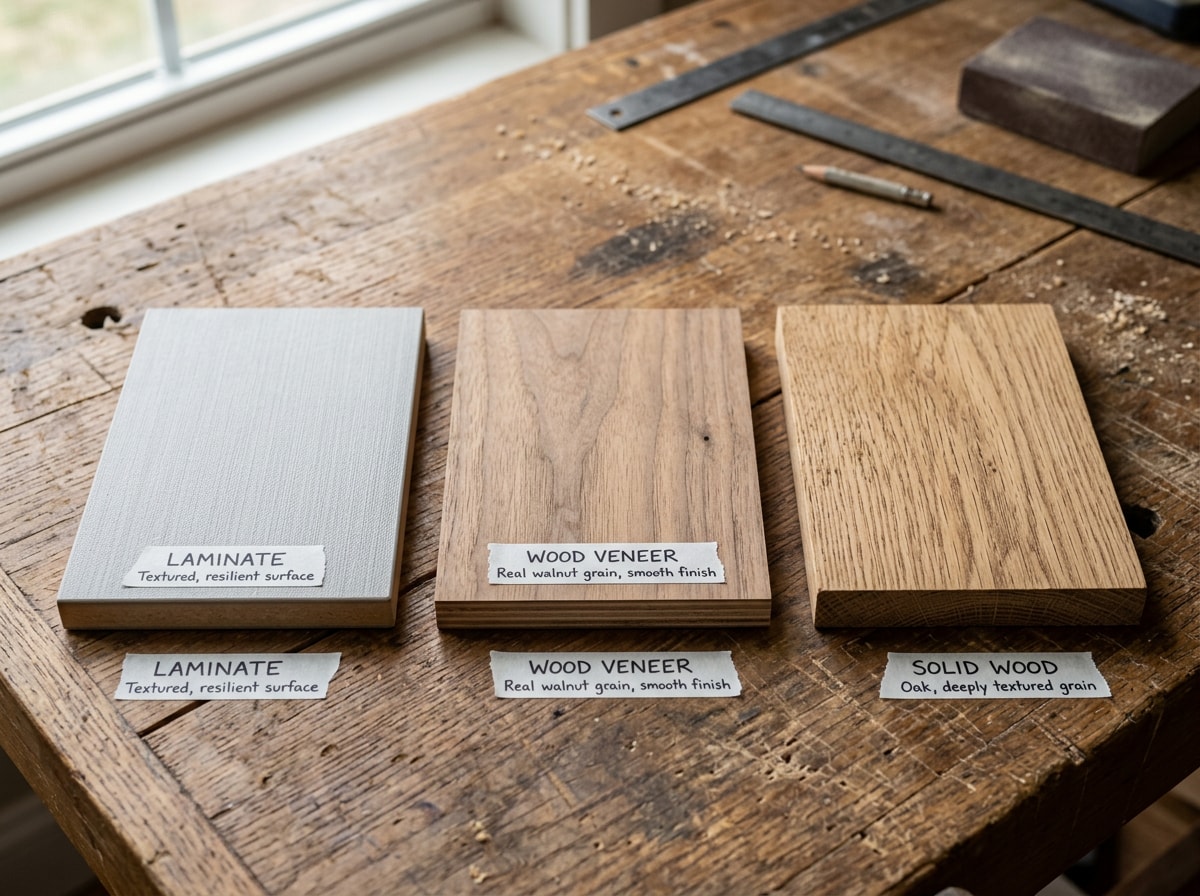
Material choice shapes both the price and the lifespan of a refacing project, especially given Miami Springs humidity. The three most common refacing materials, laminate, wood veneer, and solid wood, each strike a different balance of cost, durability, and appearance.
| Material | Installed Cost (per linear ft) | Typical Lifespan | Best For |
|---|---|---|---|
| Laminate | $100 – $175 | 10 – 15 years | Budget-conscious, high-moisture kitchens |
| Wood veneer | $150 – $250 | 12 – 18 years | Authentic wood look at a mid-range price |
| Solid wood | $200 – $400+ | 20+ years | Premium finish, long-term durability |
Laminate
Laminate is a thin, synthetic surface bonded over existing cabinet doors and face frames, making it the most budget-friendly refacing option available. It resists scratches, stains, and moisture better than painted wood, which makes it a practical pick for humid South Florida kitchens, and it wipes clean easily. The tradeoff is a slightly less premium look, though higher-end laminate finishes now mimic wood grain convincingly.
Wood Veneer
Wood veneer uses a thin slice of real wood, usually applied with adhesive over existing cabinet surfaces, giving an authentic wood look at a lower cost than solid wood doors. Veneer can be applied with pressure-sensitive adhesive or a more traditional glue-and-clamp method. Adhesive veneer installs faster; glued veneer tends to hold up slightly better over time. Veneer isn't ideal for curved or heavily textured surfaces, since it needs a relatively flat substrate to bond properly. In humid climates, confirm your installer uses a moisture-resistant adhesive rated for kitchen conditions.
Solid Wood
Solid wood doors and drawer fronts are the premium refacing option, offering the most authentic look and the longest lifespan of the three materials. Pricing depends heavily on species: oak and maple sit at the lower end, while cherry or custom hardwoods push costs higher. Because solid wood expands and contracts with humidity, proper sealing and acclimation before installation matters more here than in drier regions.
Do You Need a Permit for Cabinet Refacing in Miami Springs?
Cabinet refacing is cosmetic work, so most jurisdictions treat it the same way they treat painting or flooring replacement: no permit required, as long as you aren't touching electrical, plumbing, gas, or structural elements.
A 2026 state law makes this even clearer for small projects. A local government may not require a building permit for any work valued at less than $7,500 done on a single-family home, though local governments may still require a permit for any electrical, plumbing, mechanical, gas, or structural work regardless of value.
The law took effect July 1, 2026, under Chapter 2026-63.
A few caveats worth knowing before you assume your project is exempt:
- The exemption generally does not apply to properties in flood hazard areas, which affects some lower-lying parts of Miami-Dade County.
- If your refacing project is bundled with electrical work (like new under-cabinet lighting) or plumbing changes (like relocating a sink), that portion of the job still needs a permit.
- Confirm the exemption applies to your specific property and scope with the Miami Springs building department before work begins, since local administration of the rule can vary.
For most straightforward refacing jobs under $7,500 that don't move a single pipe or wire, this change means less paperwork and a faster start date.
How Refacing Works, Step by Step
The cabinet refacing process follows a fairly consistent sequence, whether you're updating a small kitchen or a large one.
- Measure and select materials – A contractor measures every cabinet, drawer, and face frame, then you choose your material and hardware.
- Order new fronts – New doors and drawer fronts are built off-site to match your measurements, usually taking one to three weeks depending on the supplier.
- Remove old doors and hardware – Existing doors, drawer fronts, and hinges come off, exposing the face frames.
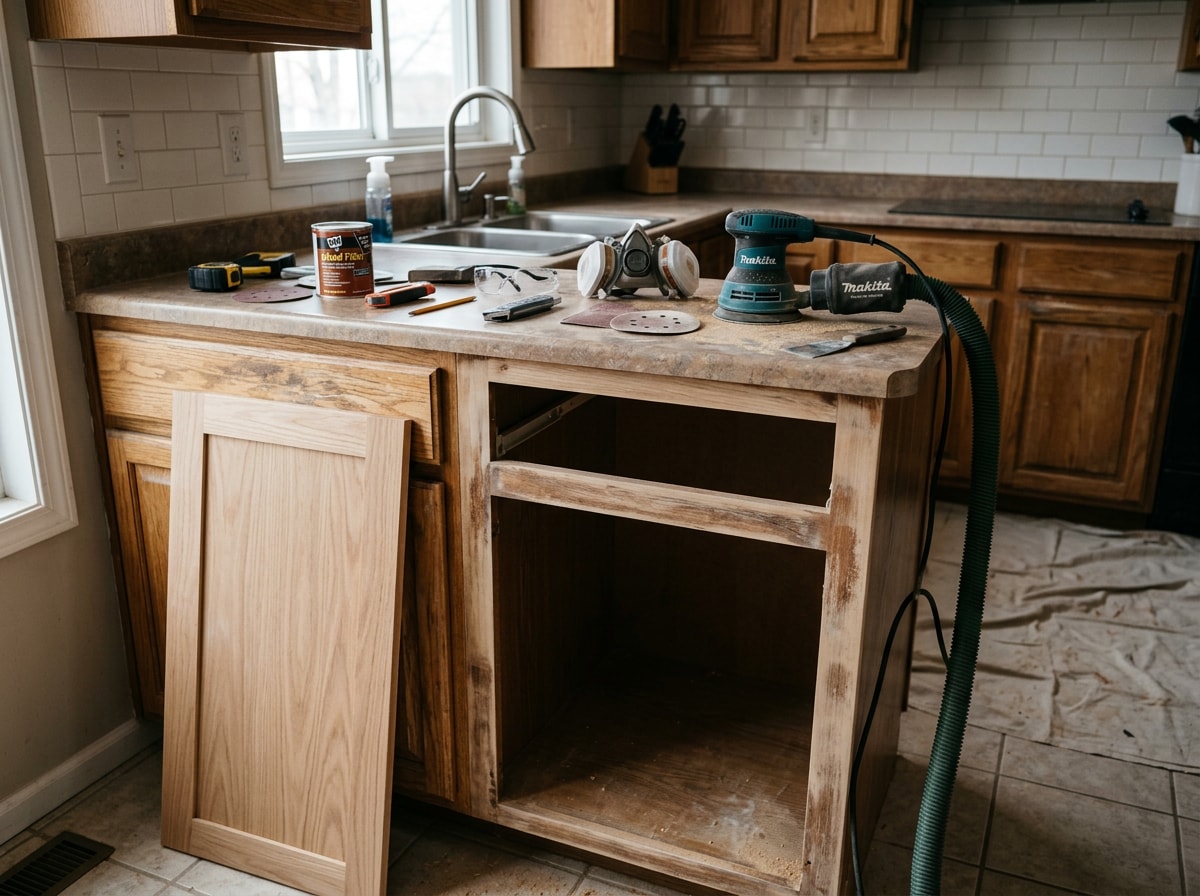
- Prep the face frames – Surfaces are cleaned, sanded, and sometimes patched to create a smooth base.
- Apply the new surface – Veneer or laminate is bonded directly to the face frames and cabinet sides.
- Install new fronts and hardware – New doors, drawers, and hardware go on last, finishing the look.
Once materials arrive, actual installation typically takes two to five days, a fraction of the multi-week timeline for full cabinet replacement. For a broader look at how refacing fits into a larger renovation, see our kitchen remodeling page.
Cabinet Refacing vs. Replacement
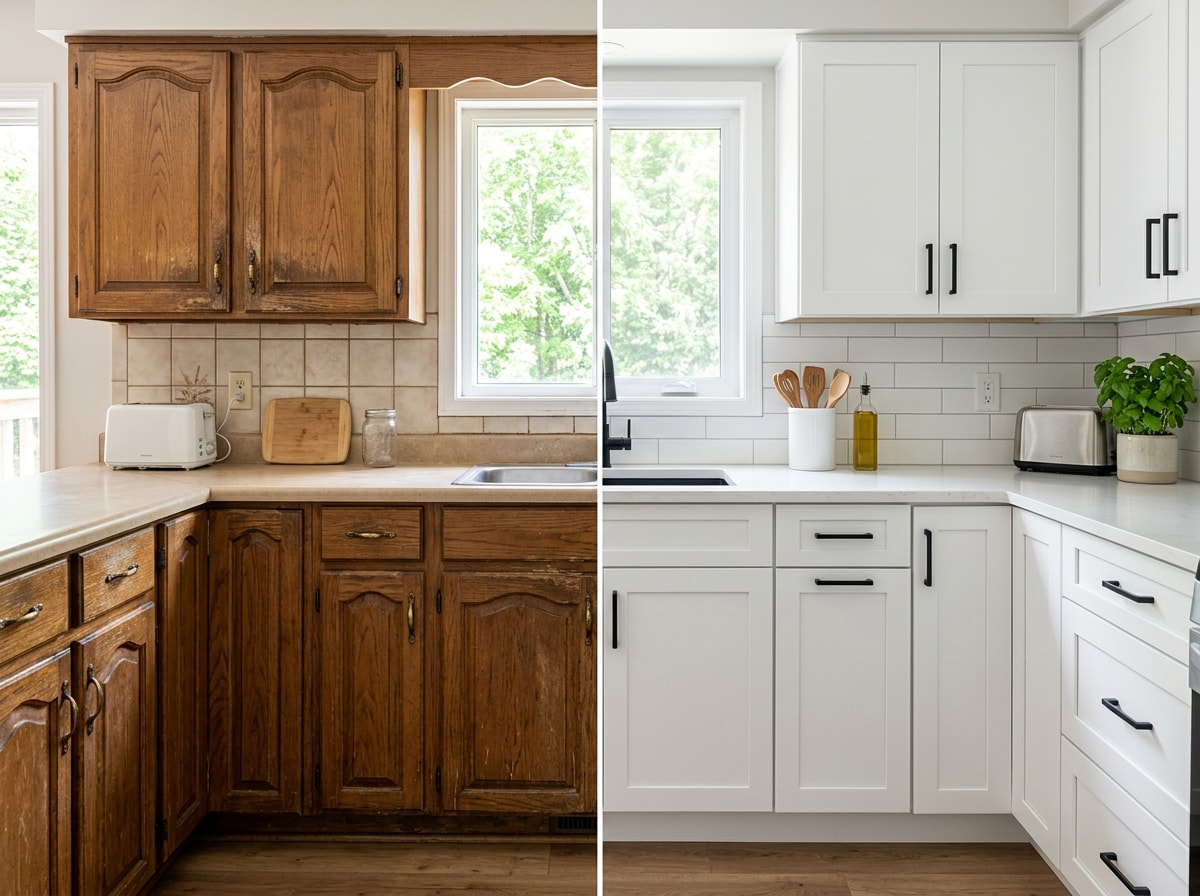
Refacing and full replacement are the two main paths to a new-looking kitchen, and the right choice depends on your cabinets' condition and your budget.
Pros of Cabinet Refacing
- Lower cost – Most refacing projects cost 30-50% less than full replacement, since you're keeping the existing boxes.
- Faster timeline – A typical refacing project wraps up in a matter of days, compared to several weeks for a full teardown-and-rebuild.
- Less disruption – Your kitchen stays mostly functional throughout the project.
- Lower material waste – Reusing sound cabinet boxes keeps usable material out of landfills.
Cons of Cabinet Refacing
- Box condition matters – If your boxes are water-damaged, warped, or loose at the joints, refacing just covers up problems that will resurface later.
- No layout changes – If you want to move the sink, add an island, or reconfigure your cabinet footprint, you'll need a full replacement instead. Our guide on planning a kitchen that fits your home walks through layout considerations if that's the direction you're leaning.
- Limited storage upgrades – Refacing offers limited ability to add deep pull-out drawers or built-in organizers unless existing box dimensions happen to accommodate them.
How Long Does Cabinet Refacing Last Compared to Replacement?
Cabinet refacing typically lasts 10 to 15 years with proper care, while a full cabinet replacement can last 20 to 30 years or more, since every component, boxes included, is brand new. The gap narrows considerably if your existing boxes are in excellent shape and the refacing materials are moisture-resistant. For many homeowners, 10-15 years of updated style at a fraction of the cost is an easy tradeoff.
Is Cabinet Refacing Worth It?
Cabinet refacing tends to pay off most reliably when the cabinet boxes are structurally sound and the layout already works. It delivers a dramatic visual upgrade at a fraction of replacement cost, and minor kitchen updates, refacing included, are consistently among the home improvement projects that recoup the largest share of their cost at resale.
Picture a typical Miami Springs home built decades ago: the kitchen layout flows well and the cabinet boxes are solid, but the doors are dated oak with worn finishes. That's close to a best-case scenario for refacing. A two-to-three-day project can transform the space without the expense or disruption of a full remodel. You can browse examples of completed work on our projects page.
On the other hand, if cabinets have water damage, sagging shelves, or a layout that no longer fits how you cook, refacing just delays a replacement you'll eventually need anyway. For homeowners in Miami Springs weighing both options, a quick in-home assessment is the fastest way to know which path makes sense. Get a free estimate and we'll walk your kitchen with you before you commit to either direction.
FAQ
Are Refacing Cabinets Expensive?
Refacing cost is significantly lower than full replacement, typically $4,000 to $9,000 for an average kitchen versus $15,000 or more for new cabinets. Whether refacing feels expensive depends on your comparison point: against a full remodel, it's a bargain; against simply repainting cabinets yourself, it costs more but delivers a more durable, professional result.
Can I Just Paint Over Already Painted Cabinets?
You can repaint already-painted cabinets, but proper prep matters more than the paint itself. That means cleaning off grease and grime, sanding or deglossing the existing finish so new paint adheres, and applying a bonding primer before topcoats. Skip these steps and paint will chip or peel within months. If surfaces are heavily worn or damaged, refacing often delivers a longer-lasting result than another round of repainting.
What Are the Downsides of Melamine Kitchen Cabinets?
Melamine cabinets are budget-friendly but carry real downsides, especially in Florida's humidity. The material is sensitive to moisture; edges and seams can swell, chip, or peel over time if water gets underneath the surface. Melamine also offers limited repair options, since once it's damaged, patching rarely looks seamless, unlike wood veneer. Melamine is a composite wood product, so it also falls under federal formaldehyde emission rules. Regulated composite wood panels and finished products containing them must be certified as compliant with either the TSCA Title VI or the CARB Airborne Toxic Control Measures Phase II emission standards. If indoor air quality is a concern, ask your installer which standard the cabinet material meets.
What's the Difference Between Cabinet Refacing and Cabinet Refinishing?
Refacing replaces the doors, drawer fronts, and face-frame surfaces with new material. Refinishing strips, sands, and repaints or restains the existing doors and frames without replacing them. Refinishing costs less but can't change the door style, and it won't hold up as long if the original doors are already worn or damaged.
Do I Need a Permit for Cabinet Refacing in Miami Springs?
Usually not. Cabinet refacing is cosmetic work that doesn't touch electrical, plumbing, gas, or structural systems, so it typically falls outside permit requirements. As of July 1, 2026, Florida law also formally exempts qualifying residential work under $7,500 from permitting, though flood zone properties and any electrical, plumbing, or structural work are excluded. Confirm your specific project with the Miami Springs building department before starting.